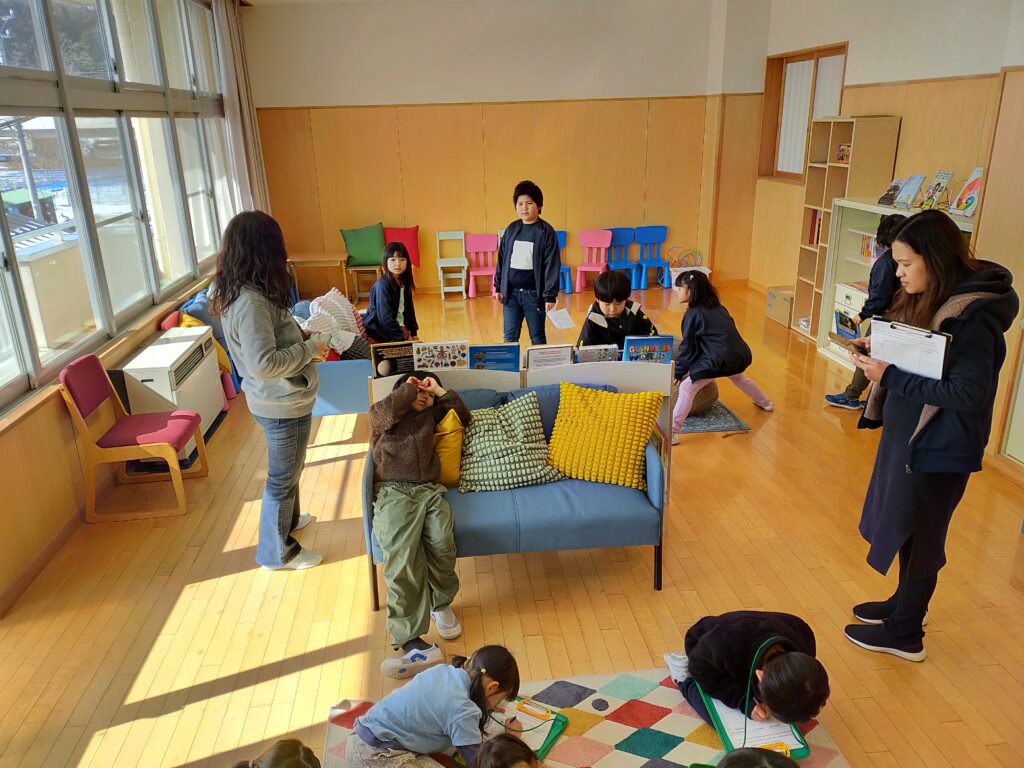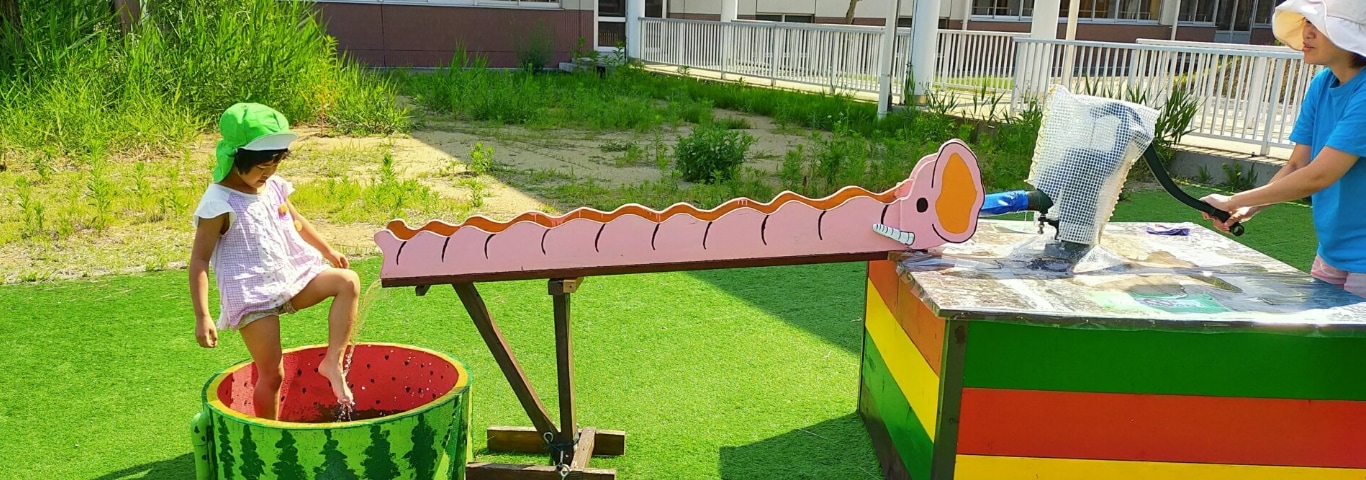
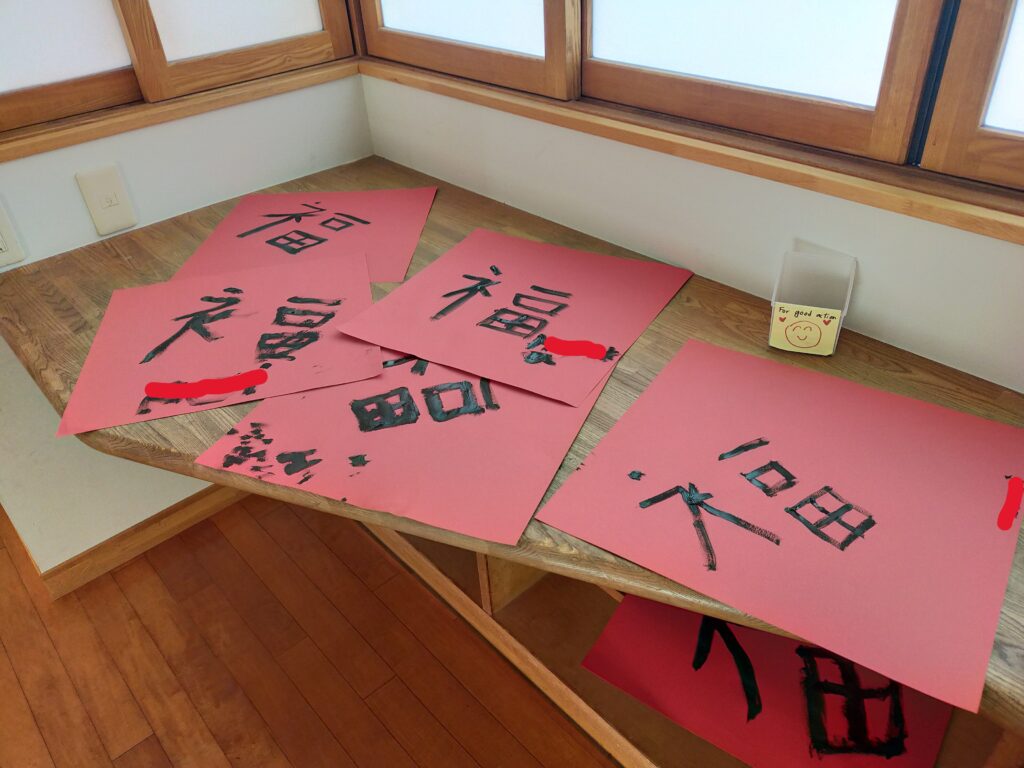
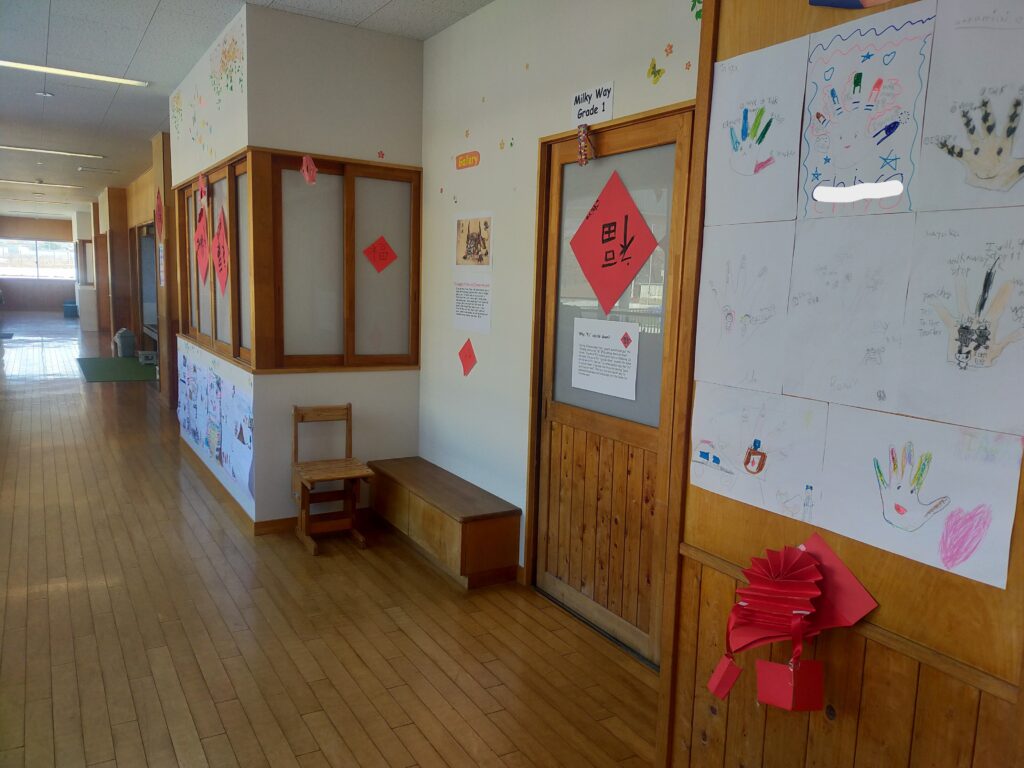
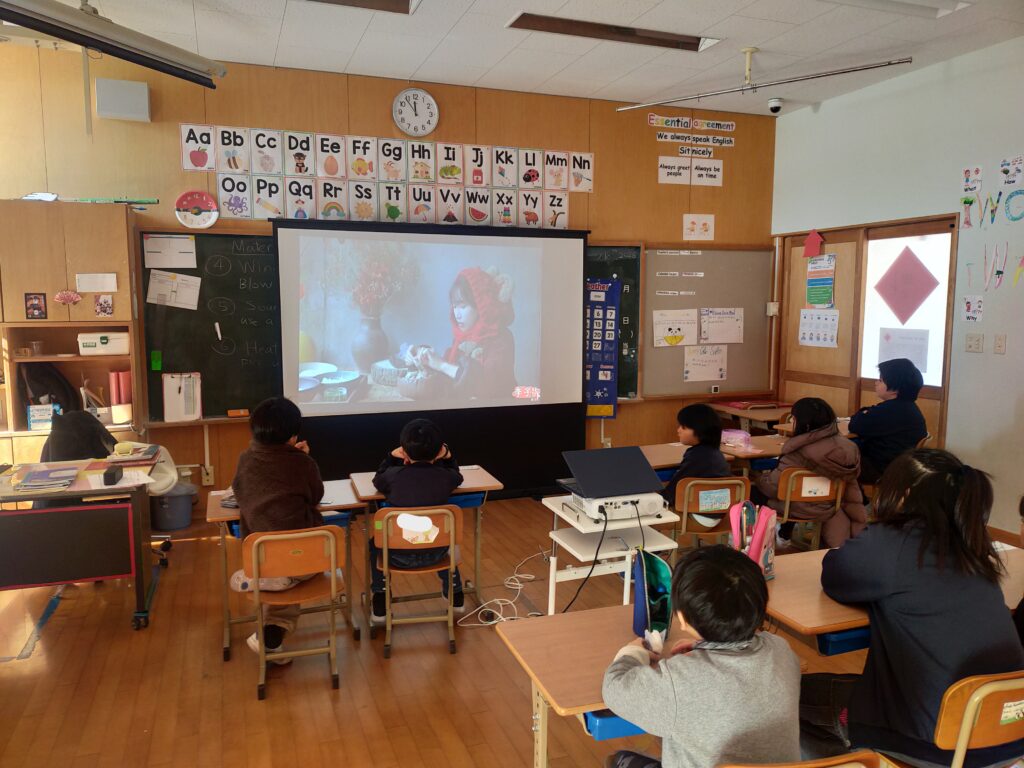
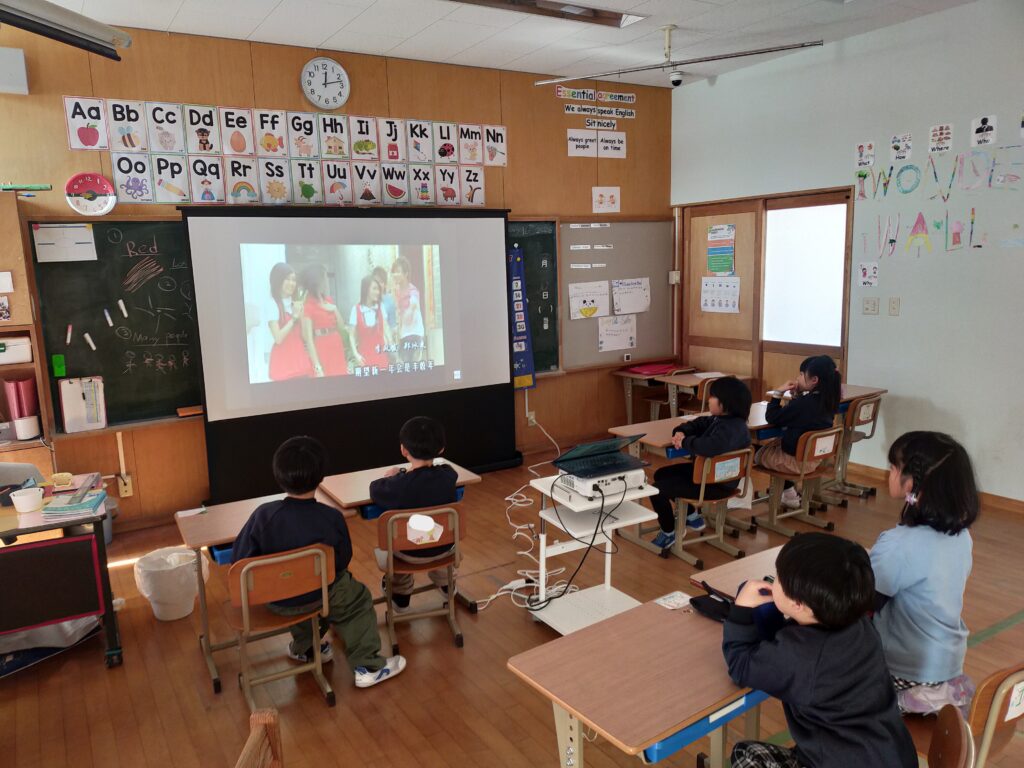
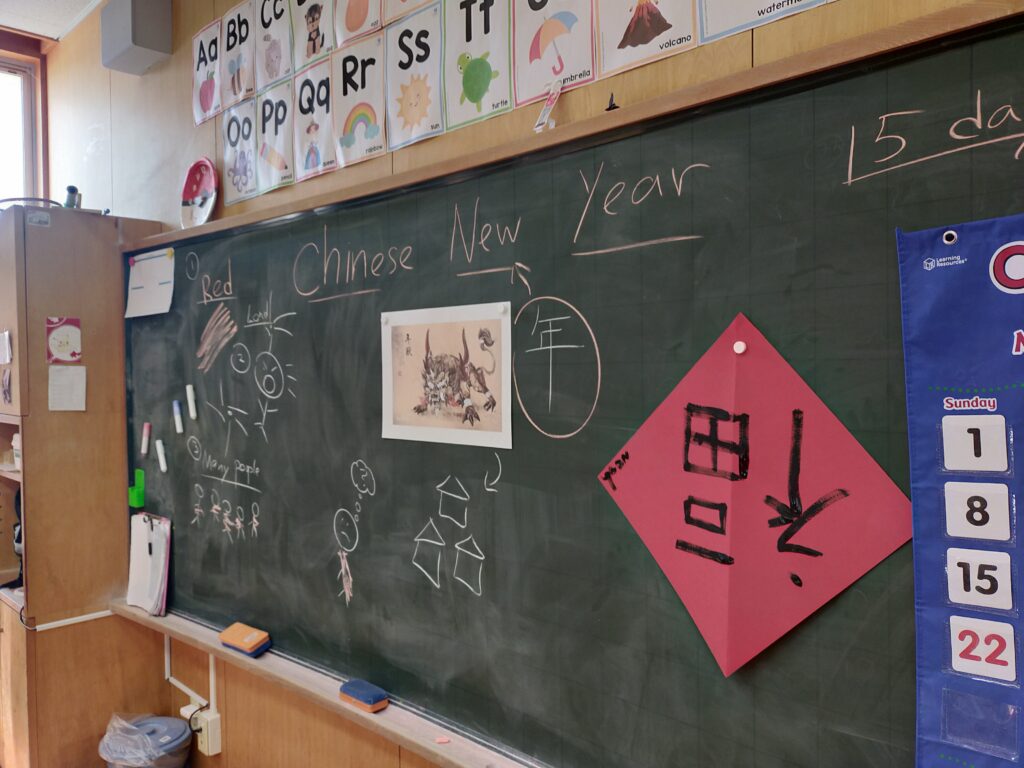
This week marked the beginning of the Lunar New Year in Chinese culture. We learned about the origins and traditions of Chinese New Year, practiced writing the character “blessing” (福) in Kanji, and decorated our classroom with red ornaments. We also explored how the materials around us connect to Chinese New Year celebrations. The students discovered that common materials such as paper and plastic have played important roles in traditional celebrations—for example, in decorations, lanterns, and festive ornaments used in the past and today.
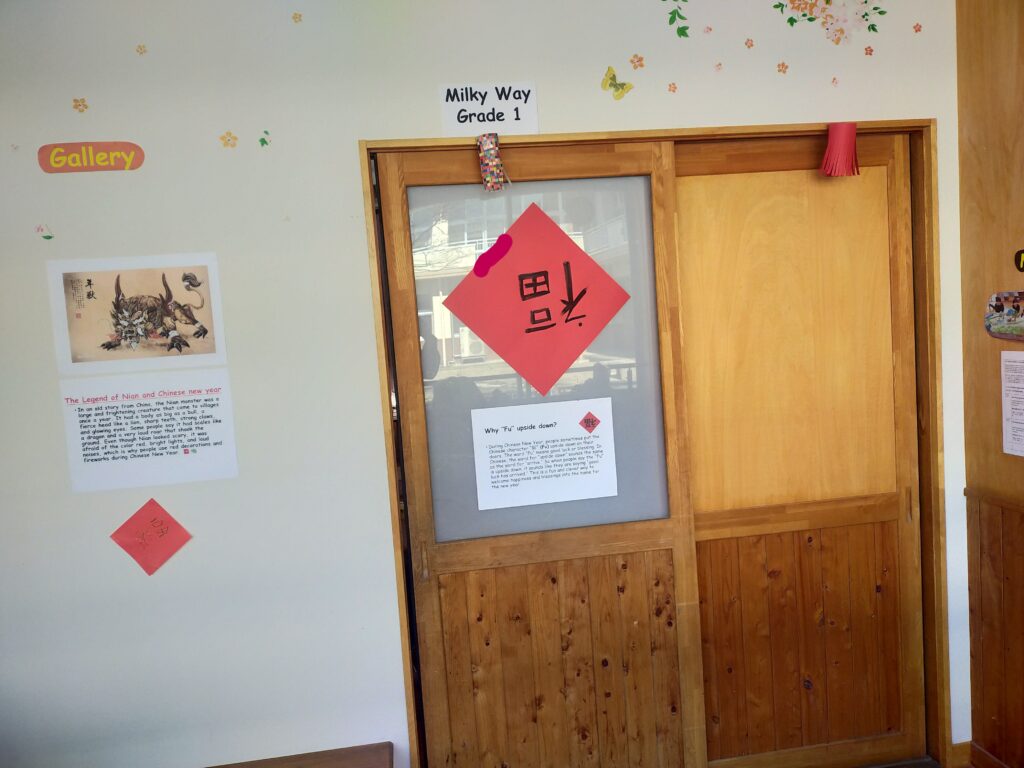
During Chinese New Year, the character “Fu” (福), which means blessing or good fortune, is often hung upside down on doors or walls. This is because in Mandarin Chinese, the word for “upside down” (倒, dào) sounds the same as the word for “arrive” (到, dào). When people say “Fu is upside down” (福倒了), it sounds like “Good fortune has arrived” (福到了). By placing the character upside down, families are symbolically welcoming good luck and blessings into their homes for the new year.
今週は、中国文化における旧正月(春節)の始まりの週でした。私たちは旧正月の由来や伝統について学び、「福」という漢字を書いて練習し、教室を赤い飾りで装飾しました。また、身の回りにある材料が中国の旧正月とどのように関係しているのかについても探究しました。紙やプラスチックなどの身近な材料が、昔から現在に至るまで、飾りやランタン、お祝いの装飾などに使われてきた大切な材料であることに気づきました。
中国の旧正月(春節)では、「福」という字を逆さまにしてドアや壁に飾ることがあります。「福」は「幸せ」や「幸運」という意味があります。中国語では、「逆さま」という意味の「倒(dào)」と、「到着する」という意味の「到(dào)」の発音が同じです。そのため、「福が逆さまになっている(福倒了)」という言い方が、「福がやって来た(福到了)」という言葉と同じ音になります。つまり、「福」を逆さまに飾ることで、「幸運が家にやって来ますように」という願いを込めているのです。
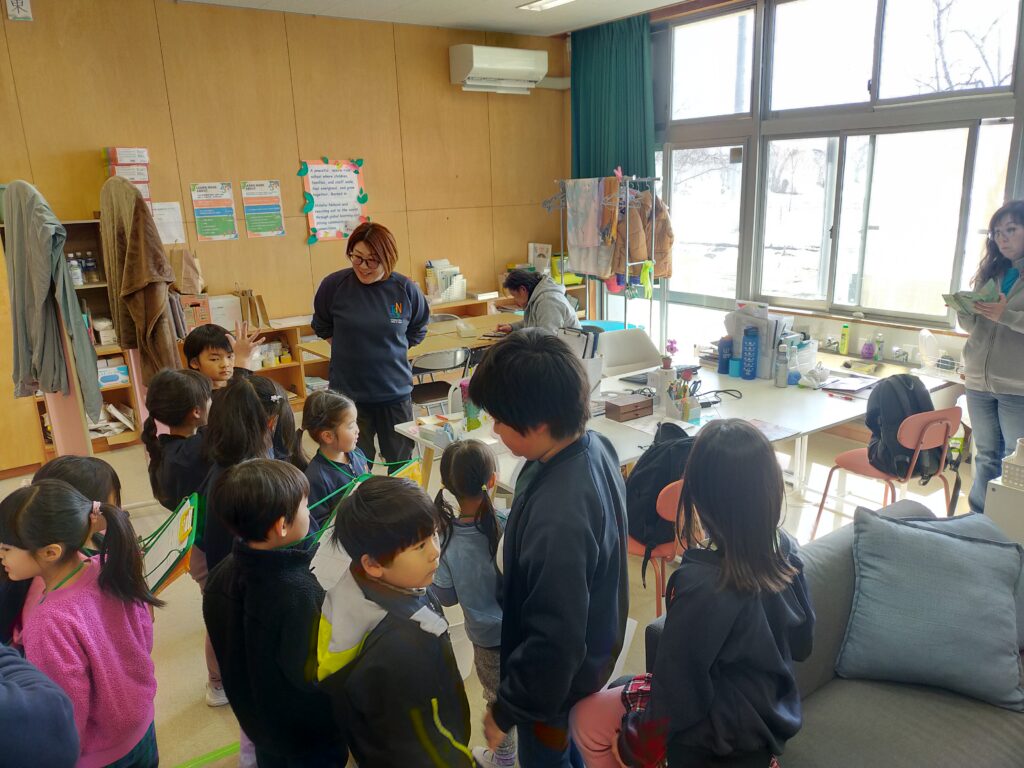
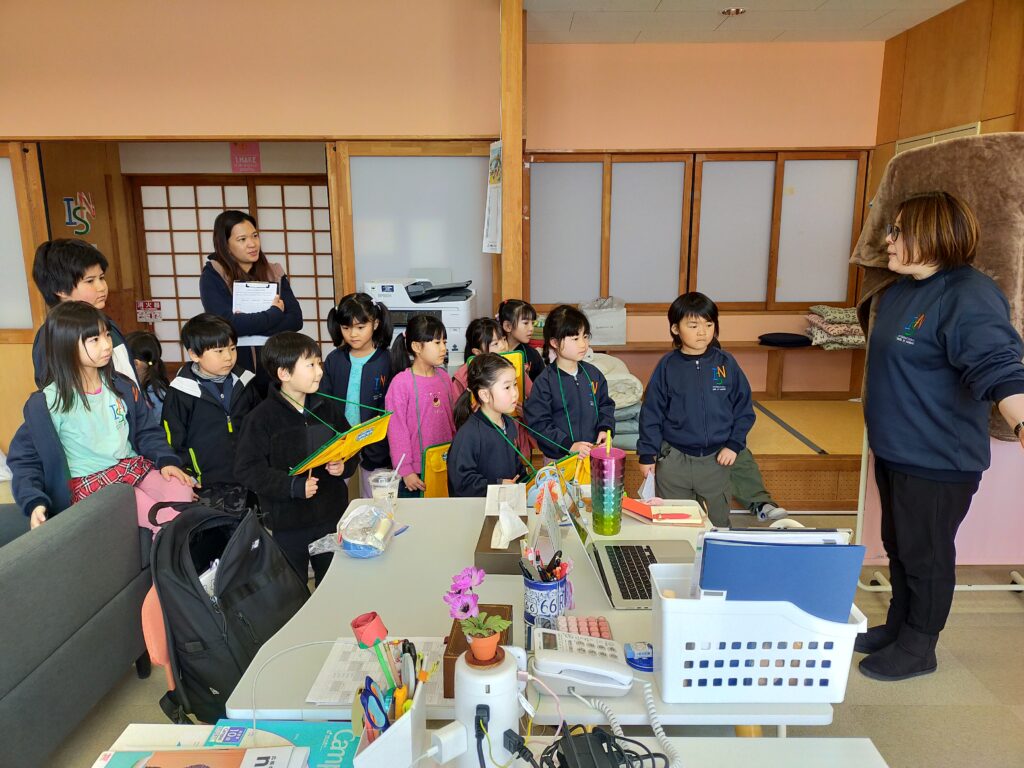
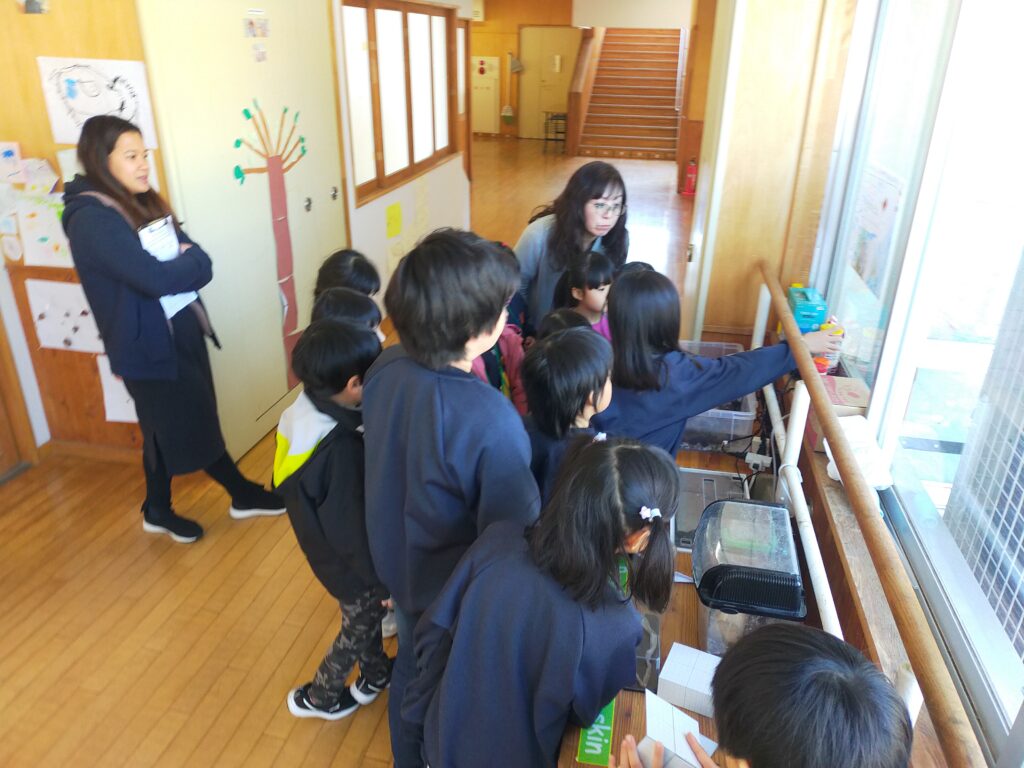
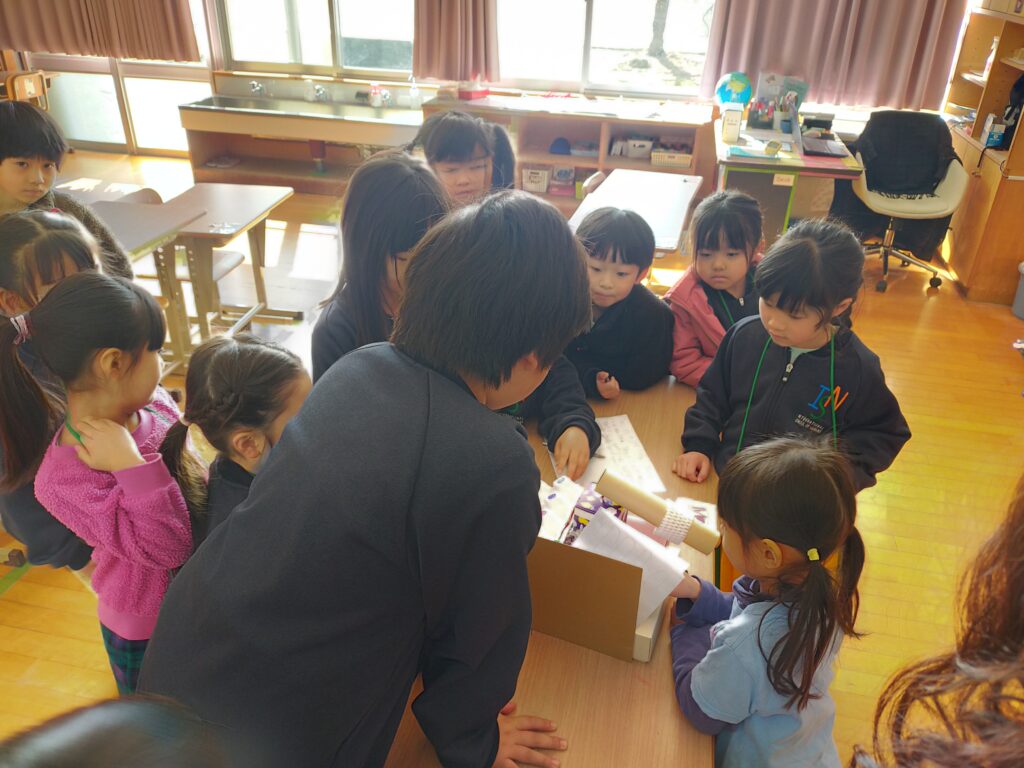
In addition, we welcomed guest students from the Nagano campus. They are one year younger than our class and will soon be entering elementary school. Our students did a wonderful job guiding them around the campus and showing them what life is like as an elementary school student. Well done, everyone!
さらに今週は、長野キャンパスから年下のゲストの児童が来てくれました。もうすぐ小学校に入学する子どもたちです。私たちのクラスの児童は、校内を案内し、小学生の生活がどのようなものかを紹介してくれました。みなさん、本当によく頑張りました!