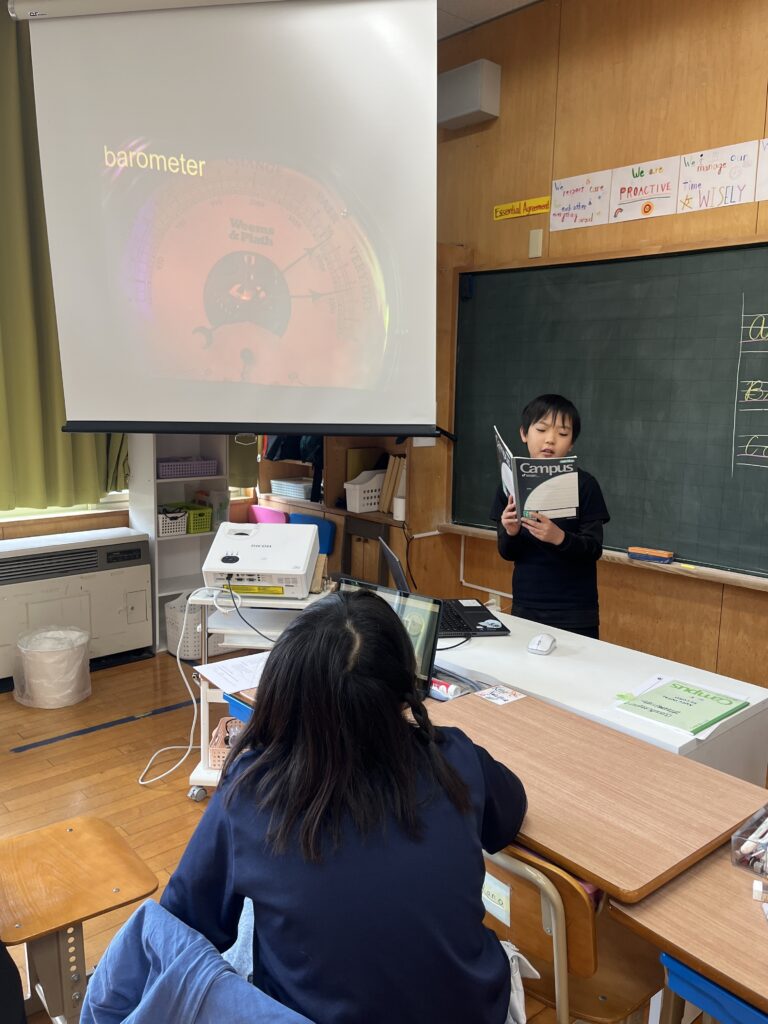
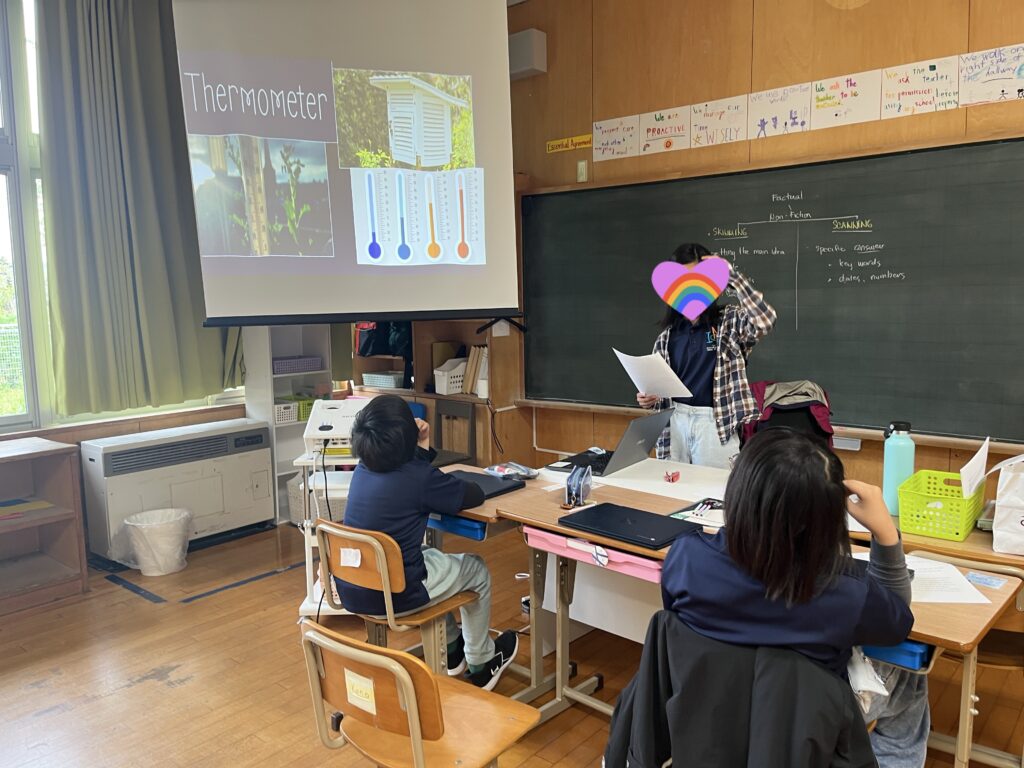
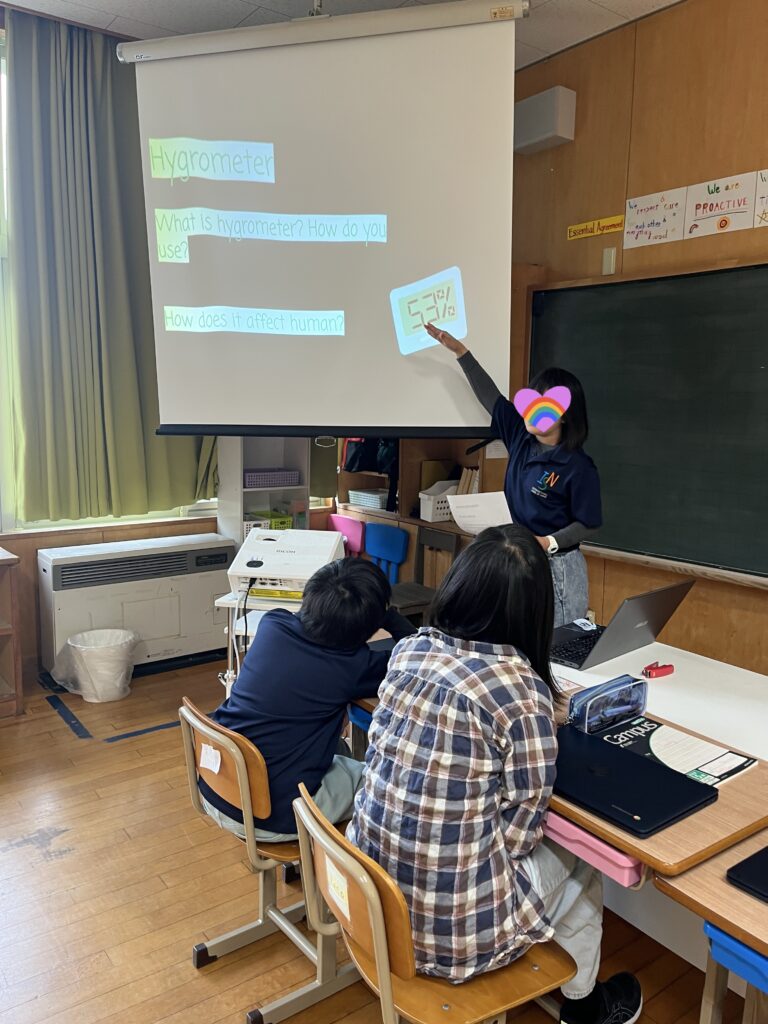
We began the week with student presentations on assigned weather instruments, allowing everyone to take the lead in their own learning.
週の始めには、各自に割り当てられた気象観測機器についての発表を行い、一人ひとりが主体的に学びの中心となる機会となりました。
Each student introduced their instrument, explaining how it works and what it measures. From thermometers and barometers to anemometers and rain gauges, students demonstrated a clear understanding of how these tools help scientists observe and predict weather patterns. It was wonderful to see students using subject-specific vocabulary and confidently sharing their research with their peers.
それぞれの児童が自分の担当した機器を紹介し、その仕組みや何を測定するのかを説明しました。温度計や気圧計、風速計、雨量計などについて学び、これらの道具がどのようにして科学者が天気を観測し、予測するのに役立っているのかをよく理解している様子が見られました。専門的な語彙を使いながら、自信をもって自分の調べたことを友だちに伝える姿がとても印象的でした。
Beyond simply presenting facts, students also made meaningful connections to real life. They discussed how weather instruments are used in everyday situations—such as planning travel, preparing for storms, and even deciding what to wear each day. These discussions helped deepen their appreciation of how science is not just something we study in class, but something that impacts our daily lives.
また、単に事実を発表するだけでなく、学んだことを実生活と結びつけて考えることもできました。天気観測機器が、旅行の計画や嵐への備え、さらには毎日の服装選びなど、日常生活のさまざまな場面でどのように活用されているかについて話し合いました。これらの活動を通して、科学は教室の中だけの学びではなく、私たちの生活に深く関わっているものであるという理解を深めることができました。
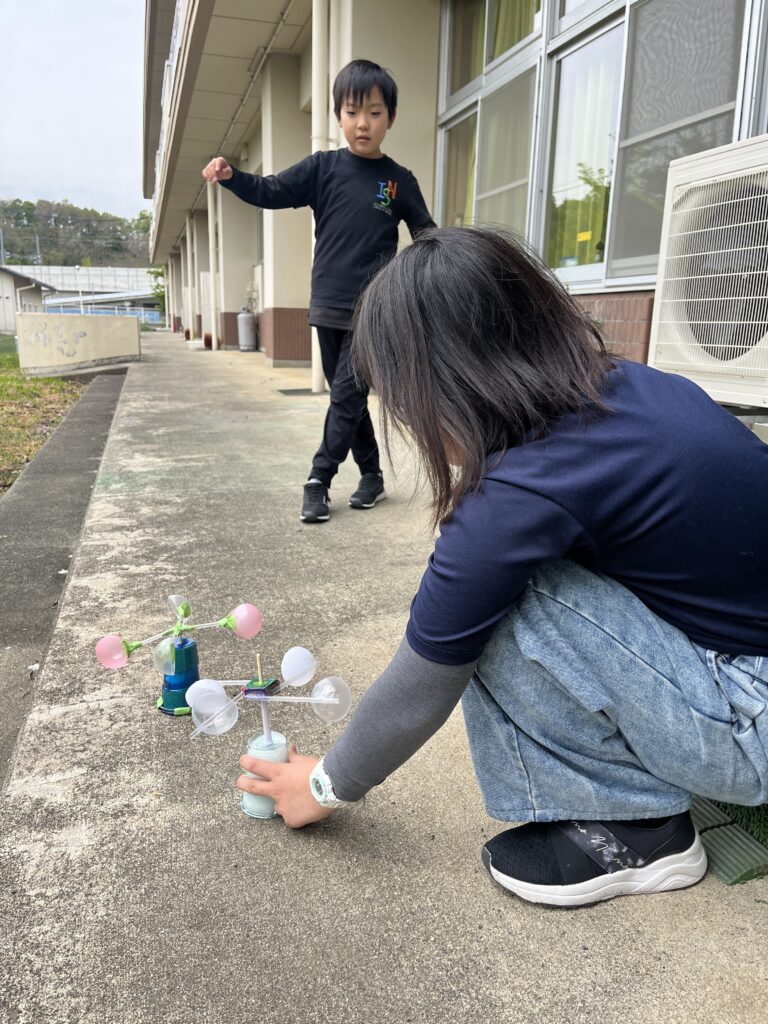
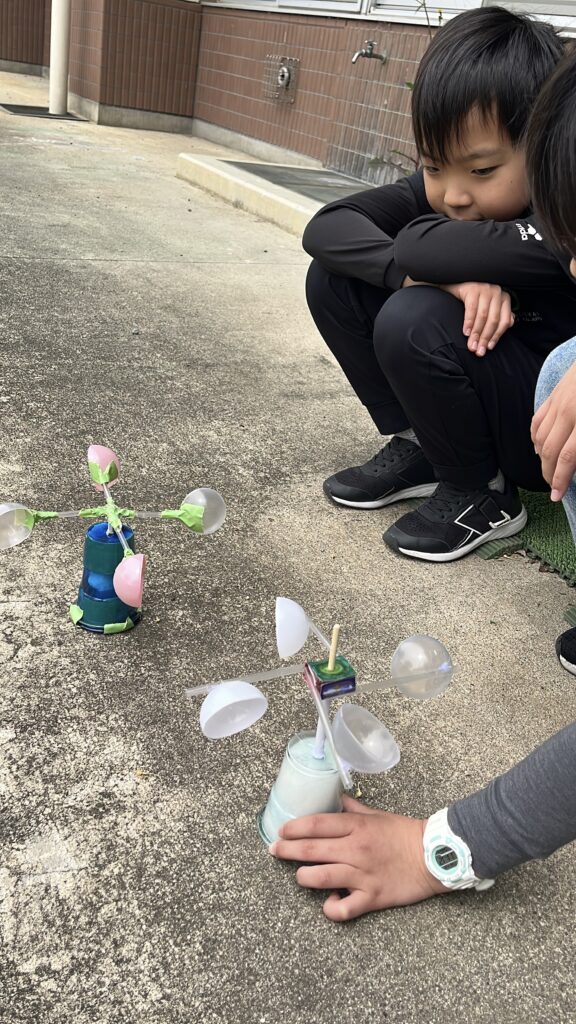
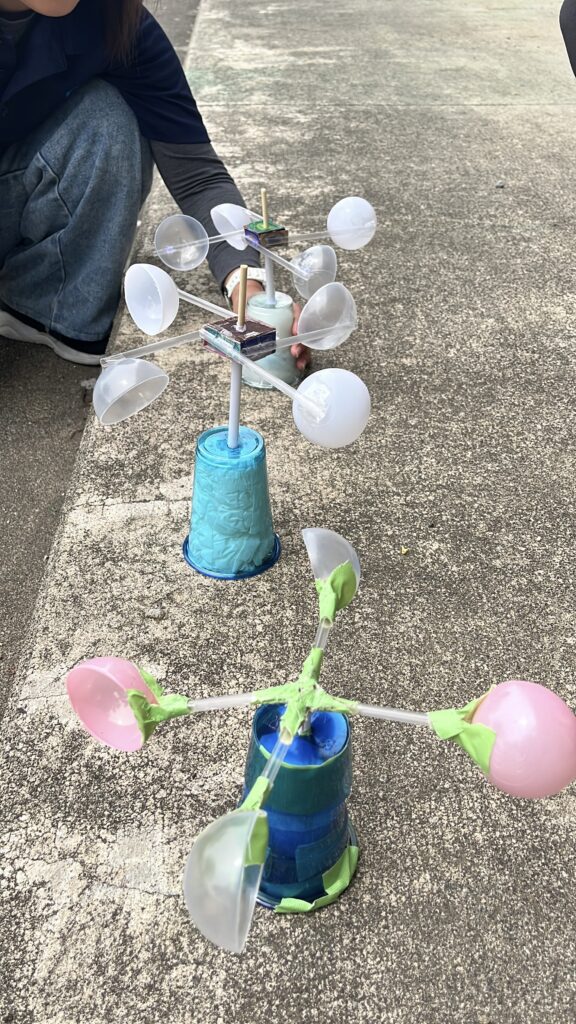
To bring their learning to life, students also tested their own anemometers outdoors. Taking advantage of the natural environment, they observed how their instruments responded to real wind conditions. This hands-on experience allowed them to see firsthand whether their designs were effective, encouraging problem-solving and reflection. There was great excitement as students compared results and discussed possible improvements to make their anemometers more accurate.
学びをより実感できるものにするために、児童たちは自分たちで作った風速計を外に持ち出してテストも行いました。自然の環境を活用し、実際の風の中で自分たちの機器がどのように反応するのかを観察しました。
この体験的な活動を通して、自分たちの設計が効果的であったかどうかを直接確かめることができ、問題解決や振り返りの力を育むことができました。また、結果を比較したり、より正確に測定するための改善点について話し合ったりする中で、子どもたちは大きな興奮と意欲を見せていました。
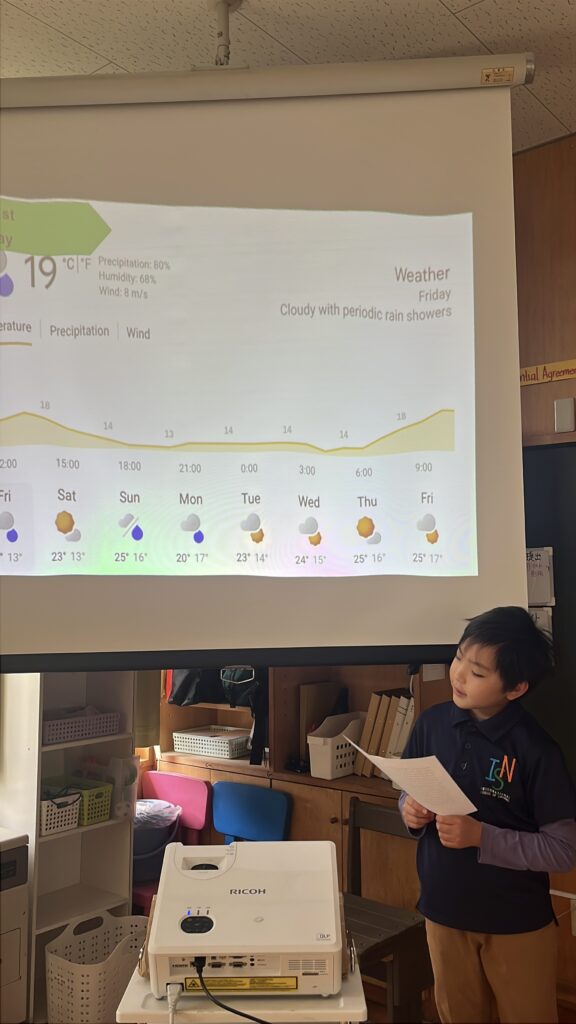
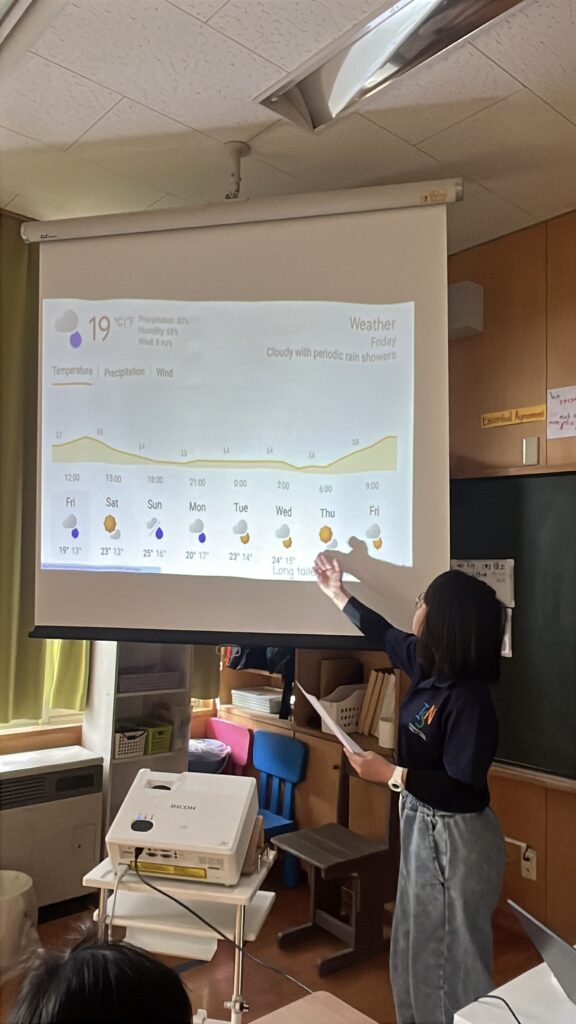
In our Inquiry in English, we focused on developing our speaking and listening skills. Students listened carefully to a weather forecast, taking down notes on the most important information from the report. Using these notes as a guide, they then wrote their own local weather forecasts. To culminate the activity, students confidently presented their forecasts to the class, applying techniques used by real weather forecasters, such as clear pronunciation, appropriate tone, and engaging delivery.
英語の探究では、スピーキングとリスニングの力を伸ばすことに重点を置きました。児童たちは天気予報を注意深く聞き取り、レポートの中から重要な情報をメモしました。
そのメモをもとに、自分たちの地域の天気予報を作成しました。活動のまとめとして、児童たちはクラスの前で自信をもって発表を行い、はっきりとした発音や適切な声のトーン、聞き手を引きつける話し方など、実際の気象予報士が用いる技術を意識して発表することができました。
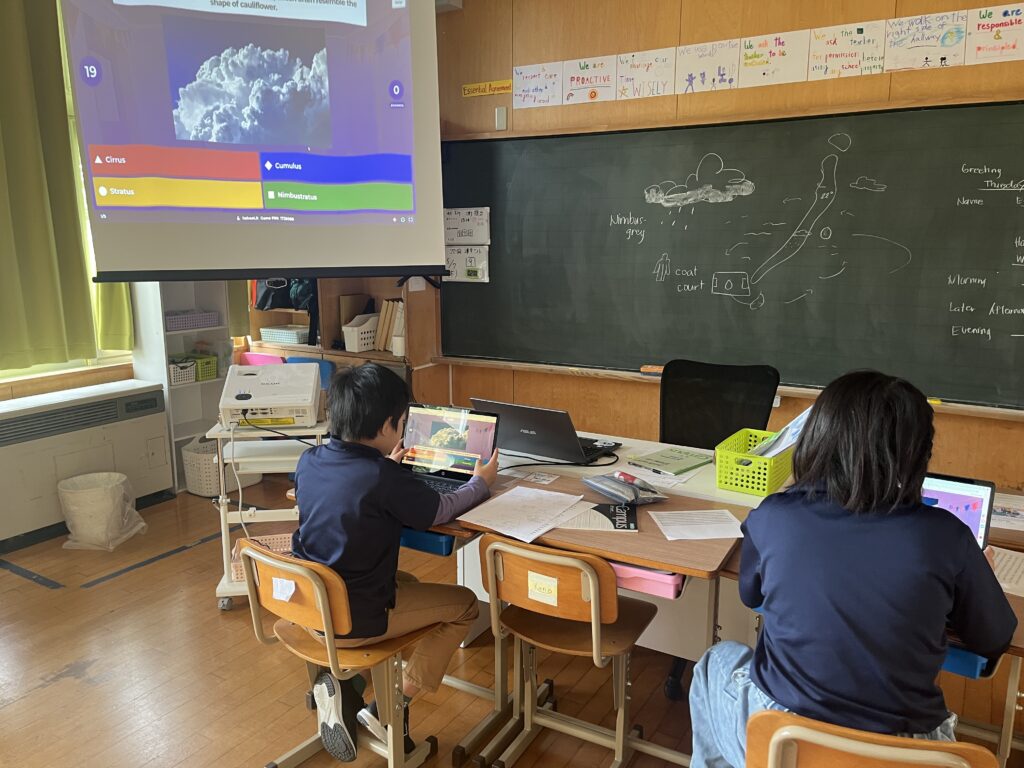
Additionally, we explored the different types of clouds and how they affect the weather. Students learned to identify clouds such as cumulus, stratus, and cirrus, and discussed what each type can tell us about upcoming weather conditions. This helped them build a deeper understanding of how observing the sky can provide clues about changes in the weather.
さらに、さまざまな種類の雲と、それらが天気にどのような影響を与えるかについても学びました。児童たちは、積雲(せきうん)、層雲(そううん)、巻雲(けんうん)などの雲を見分ける方法を学び、それぞれの雲が今後の天気についてどのような情報を示しているのかを話し合いました。
この学習を通して、空を観察することで天気の変化を予測する手がかりを得られることを理解し、より深い気づきにつなげることができました。
These activities not only reinforced their understanding of weather but also strengthened important skills such as communication, collaboration, and critical thinking. We are proud of the effort and enthusiasm shown by Grade 5 this week and look forward to continuing our exploration of weather in the coming days!
これらの活動を通して、児童たちは天気に関する理解を深めるだけでなく、コミュニケーション力、協働力、そして思考力といった重要なスキルも伸ばすことができました。今週の5年生の努力と意欲をとても誇りに思います。これからも天気についての探究をさらに深めていくことを楽しみにしています。
