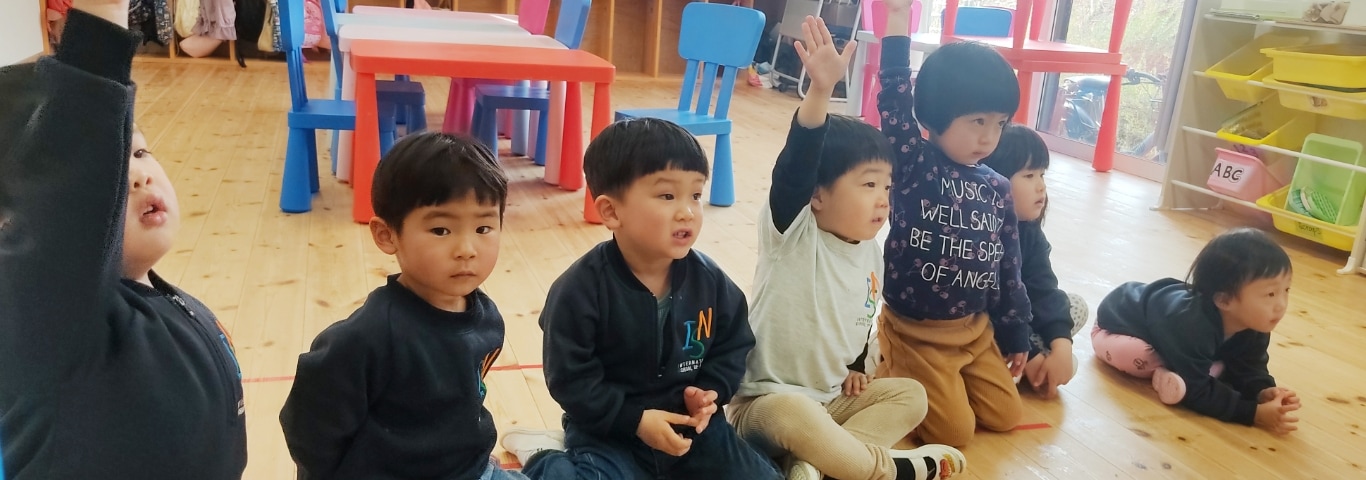
This week, as we have been coming closer to the end of our unit of inquiry on animals, we have been delving deeper into the relationships between humans and animals. This means, what humans do for animals, what animals get from humans, and what humans get from animals.
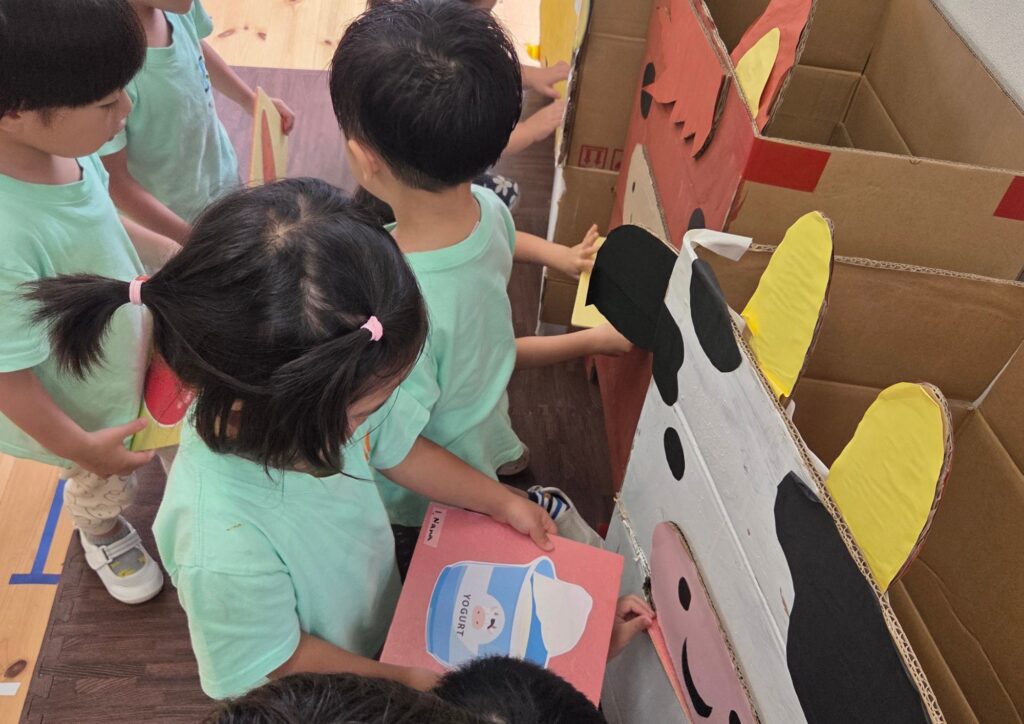
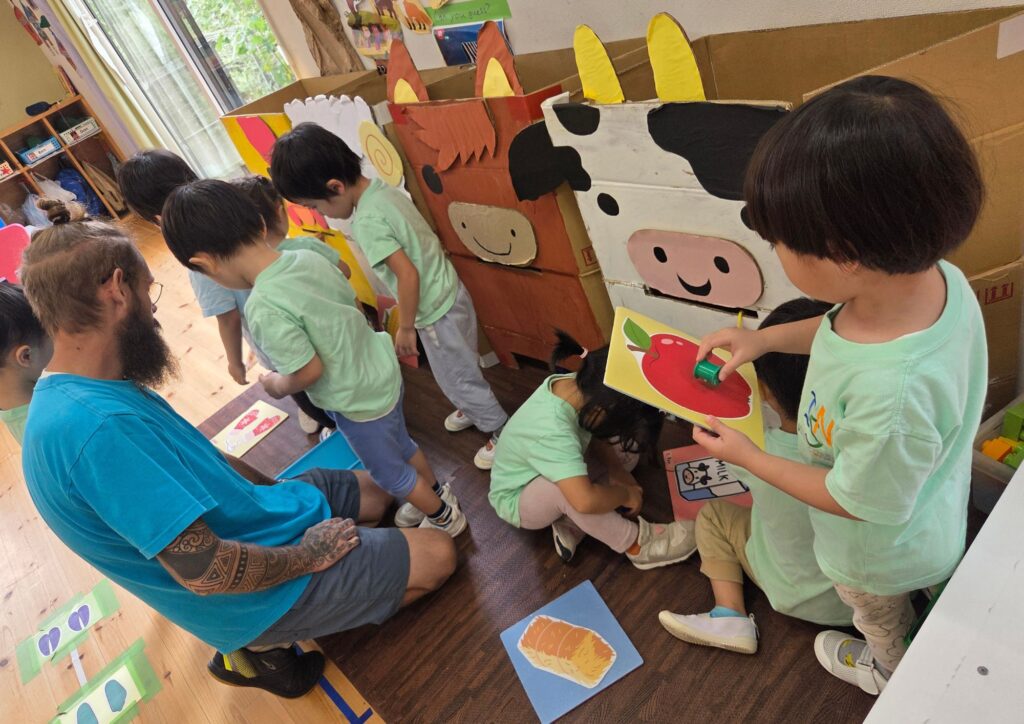
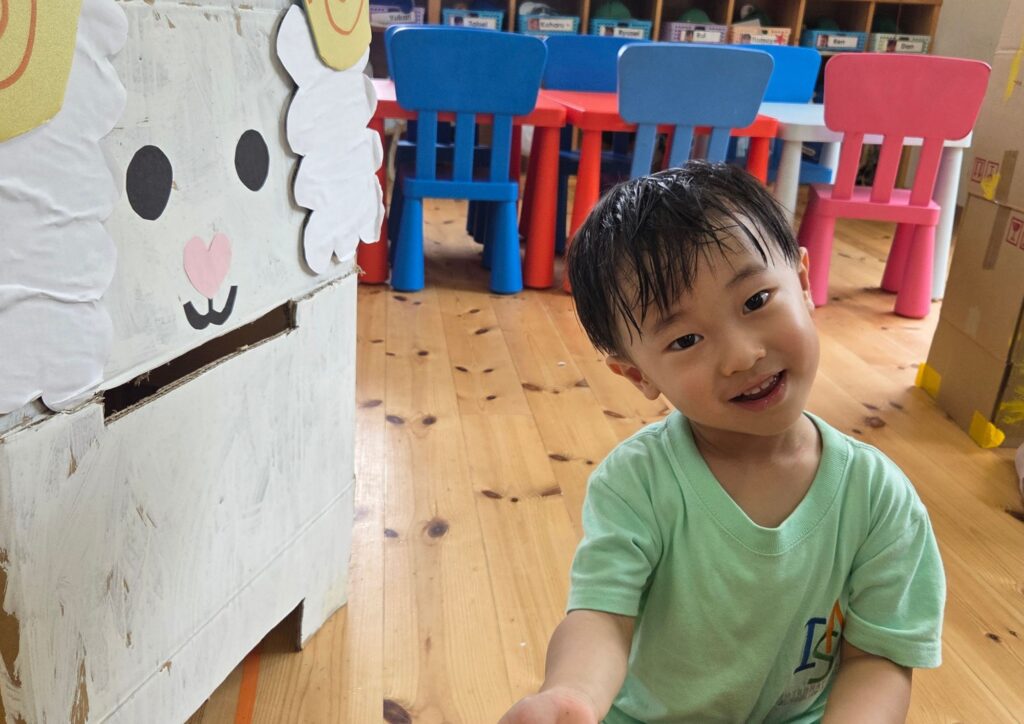
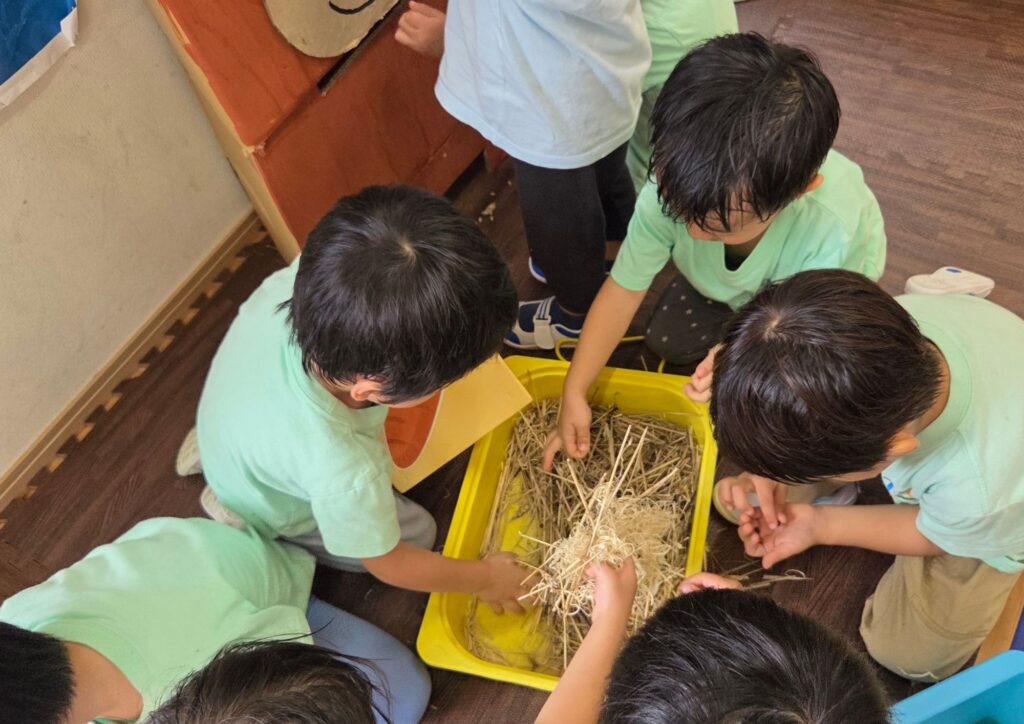
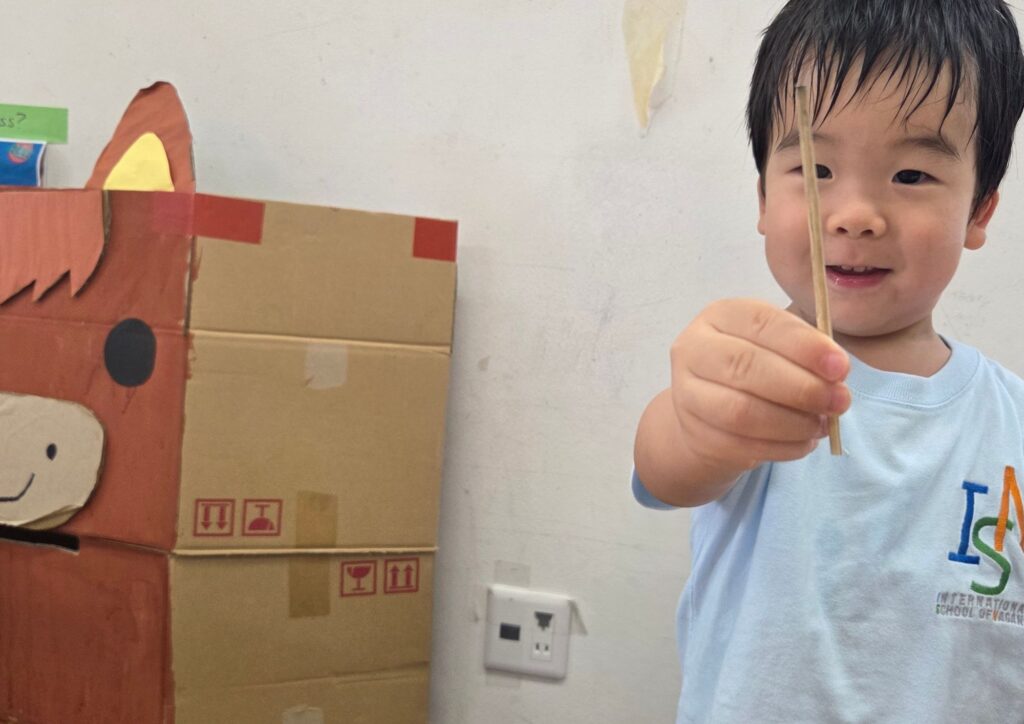
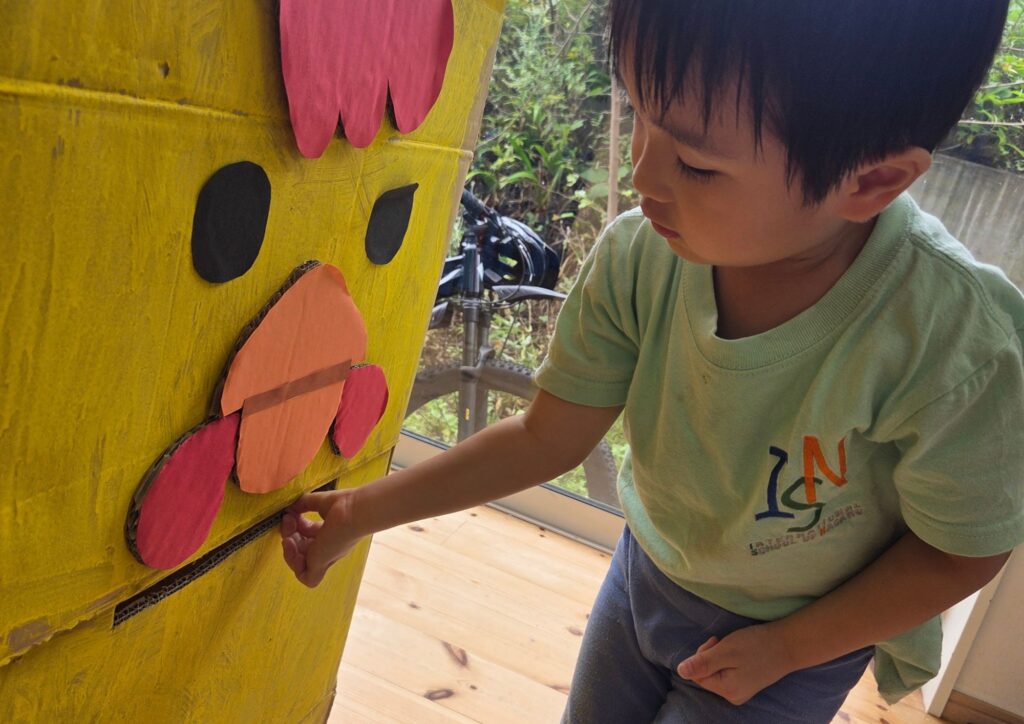
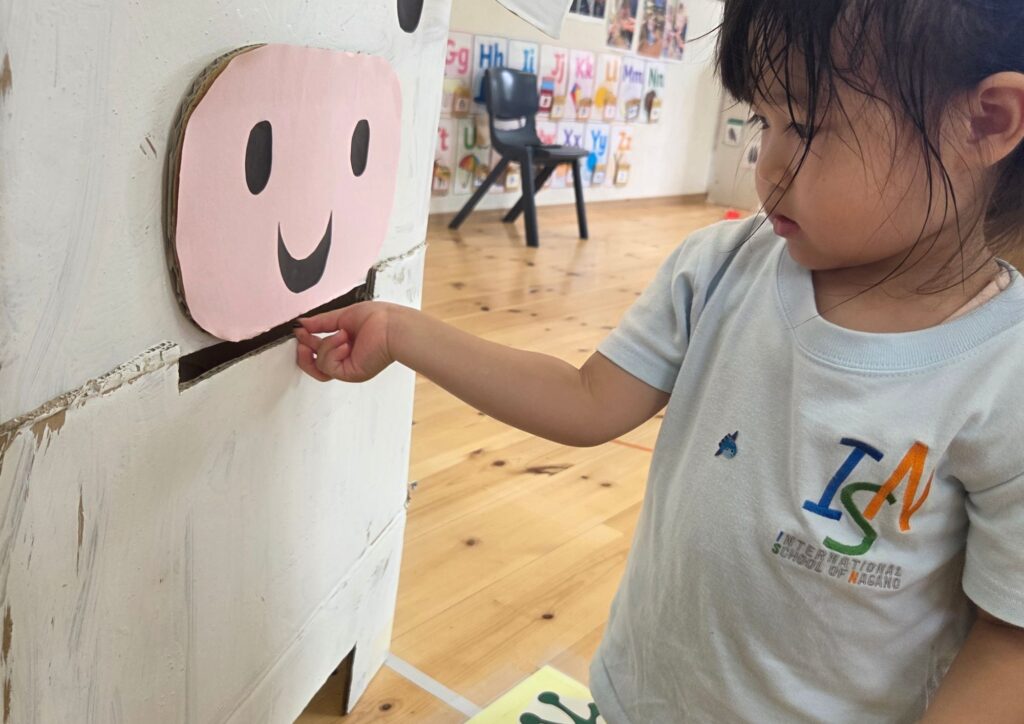
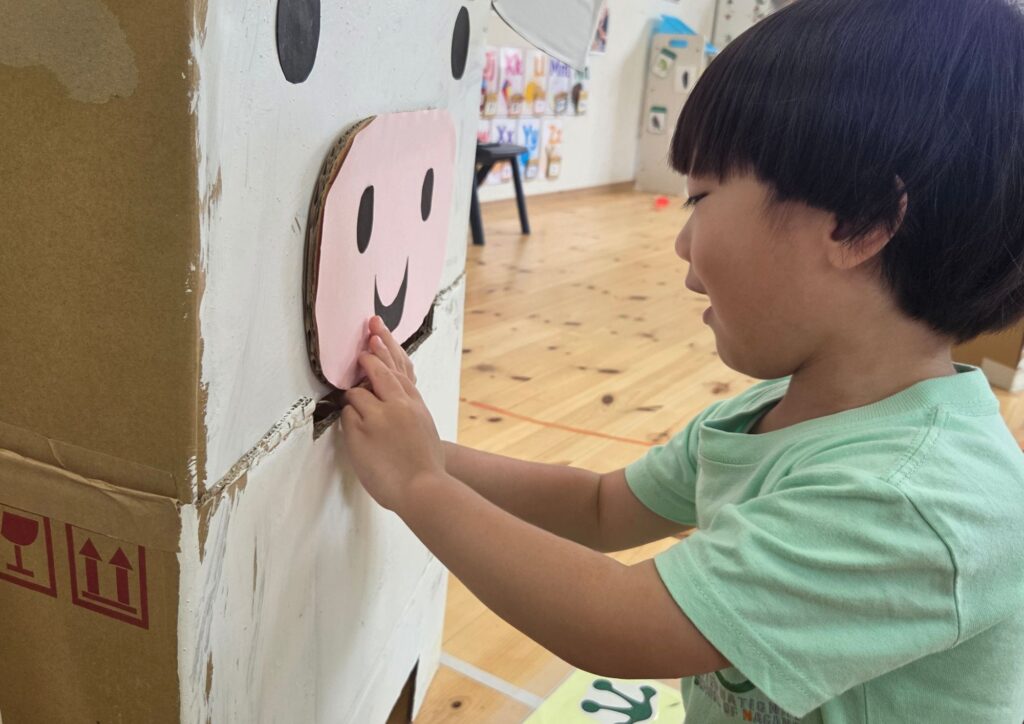
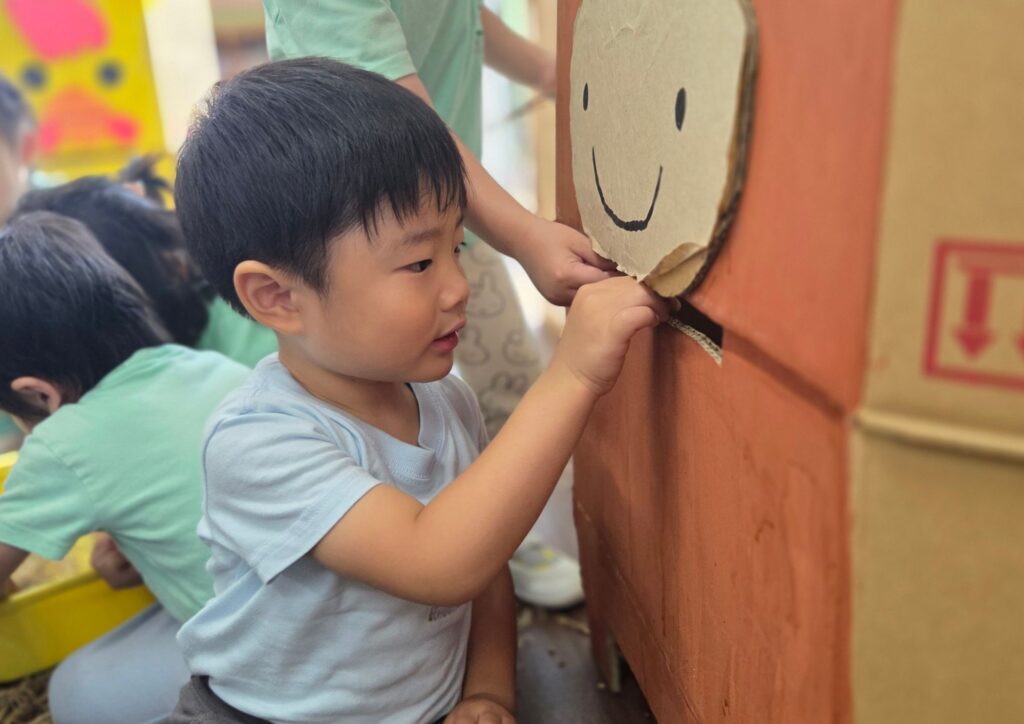
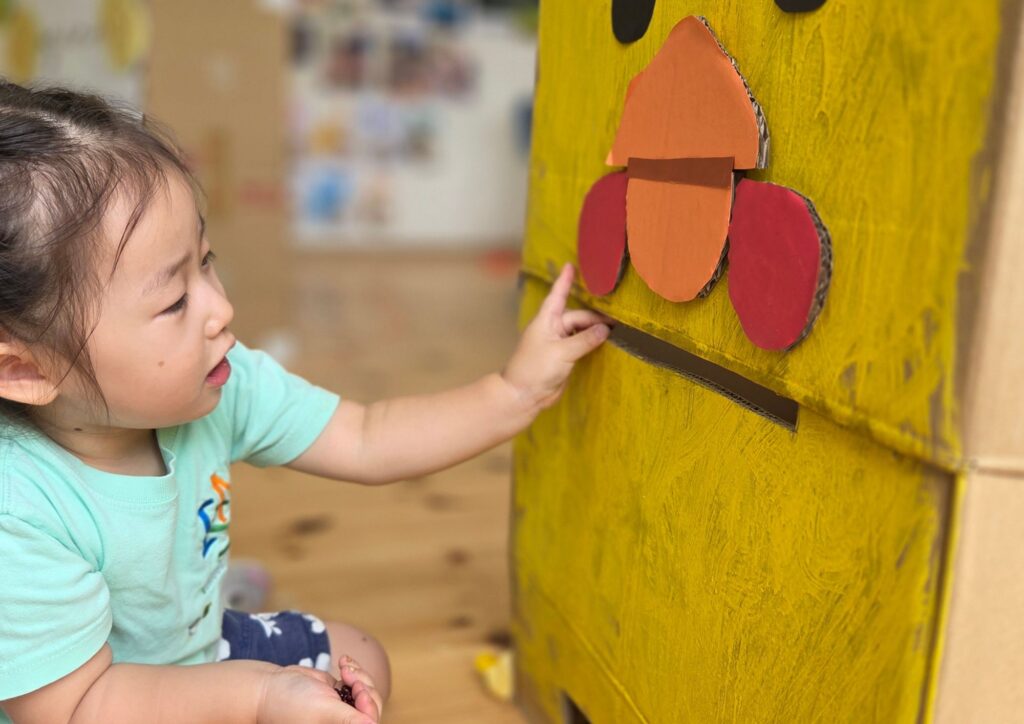
We did a lot of play-based inquiry this week where we used the lovely big models of animals we painted ourselves and started taking care of them. We brushed them, fed them, and gave them water. (Pretend water!). Using our imaginations in this way allowed students to really think about how people connect to animals, and what the jobs of real farmers might be like. We even used some real animal food to give to the models, like wheat, straw, and beans. Students were so interested in this process, and picking out the tiny beans gave us a chance to practice our fine motor skills.
「私たちは動物のために何をしているのか」「動物は私たちから何を得ているのか」「私たちは動物から何を得ているのか」ということについて考えました。
自分たちで色を塗った大きな動物の模型を使い、動物のお世話をしました。ブラシで体をきれいにしたり、食べ物をあげたり、水を飲ませたりと、遊びを通した探究活動をたくさん行いました。このように想像力を働かせながら活動することで、子どもたちは、人が動物とどのようにつながっているのか、また、実際の農家の人たちはどのような仕事をしているのかについて、深く考えることができました。さらに、小麦、わら、豆など、実際の動物の餌も模型にあげました。さらに、知識を深めるだけではなく、小さな豆を一つひとつつまんで取り分けることを通して、微細運動の練習にもつながりました。
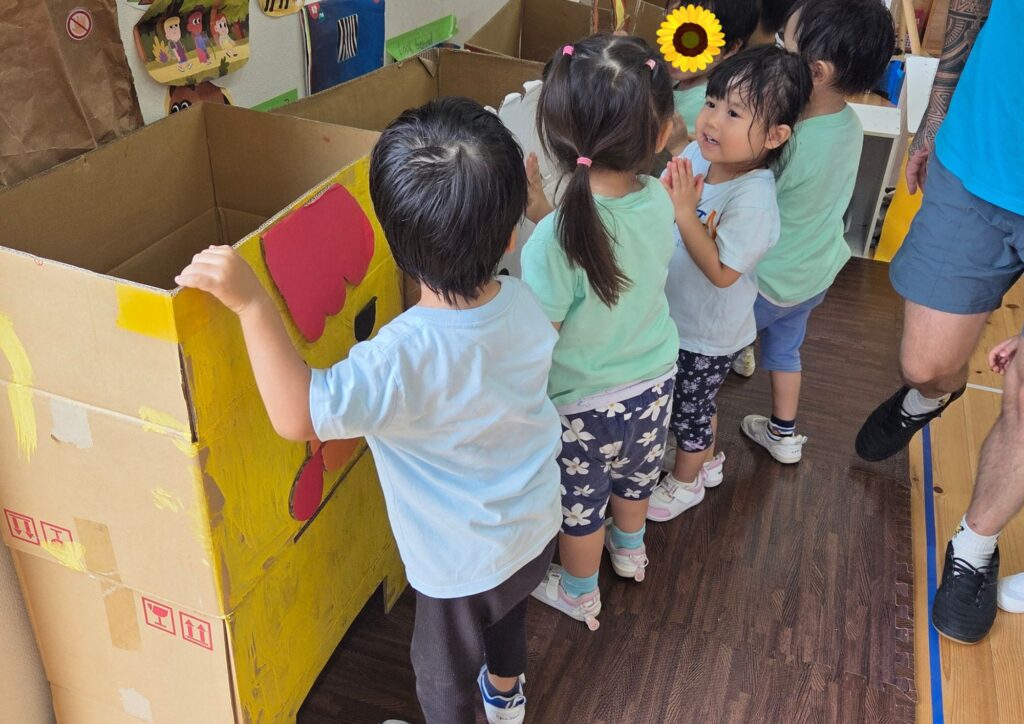
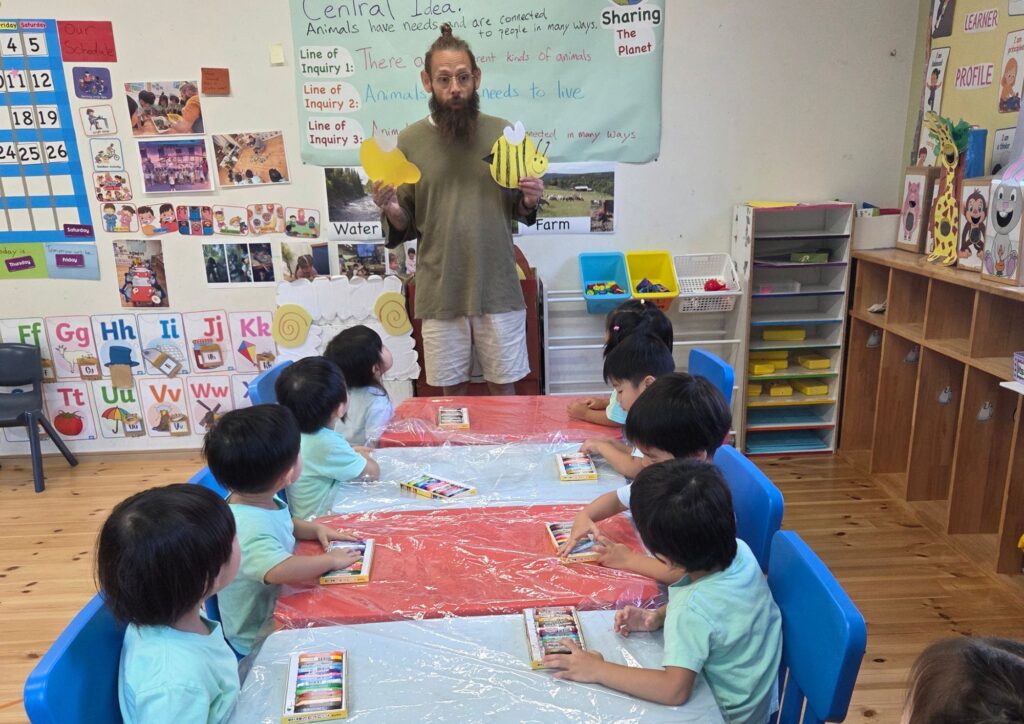
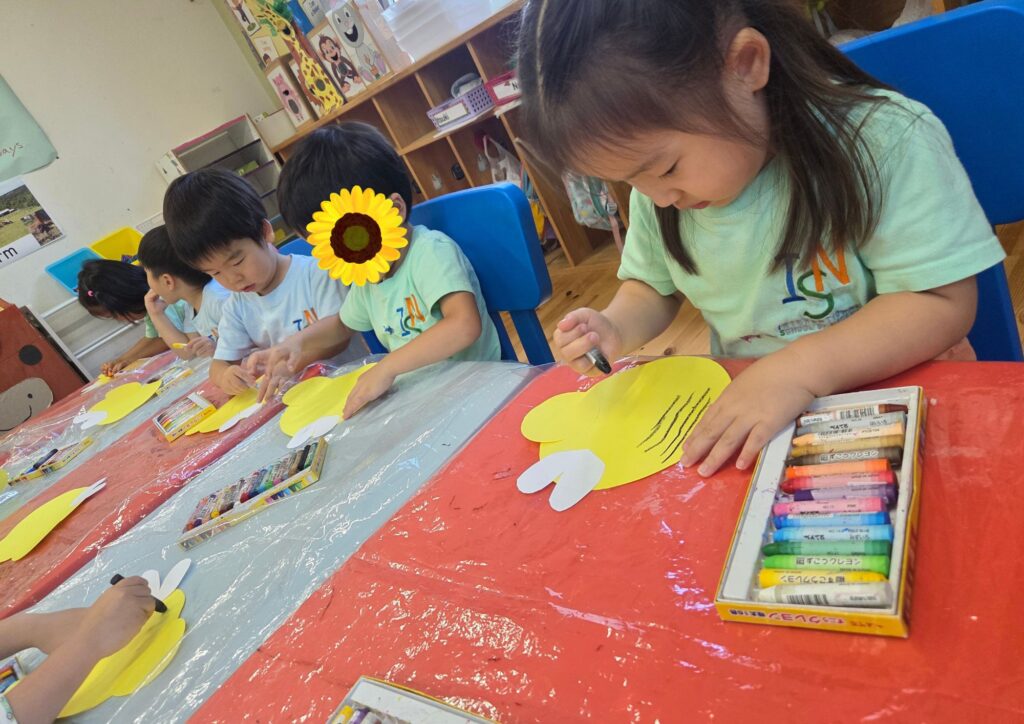
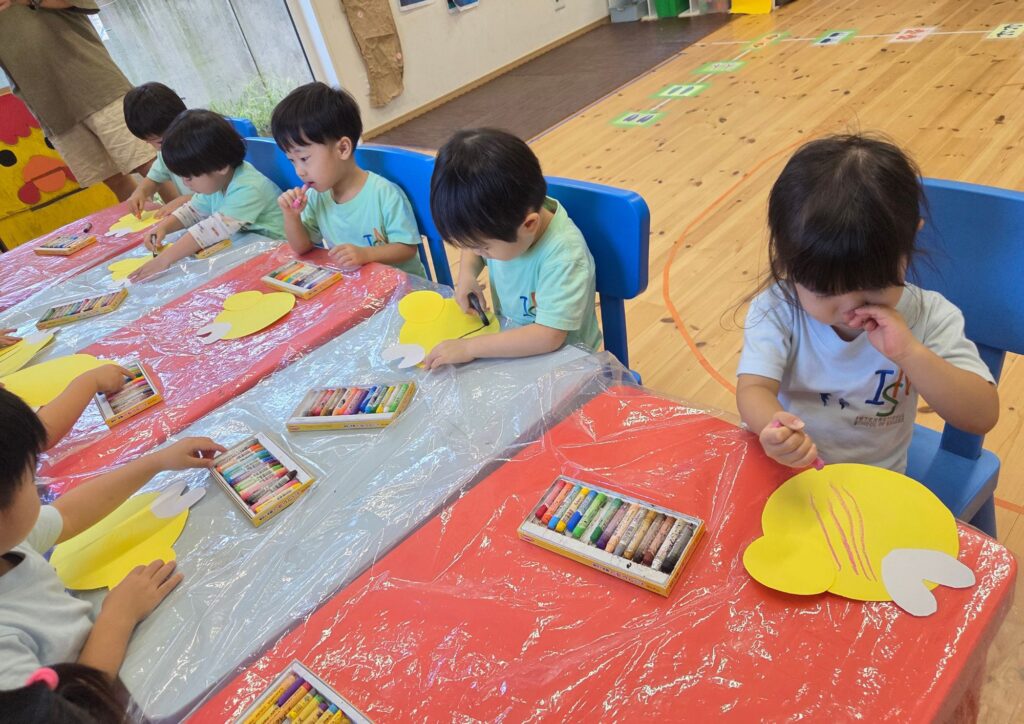
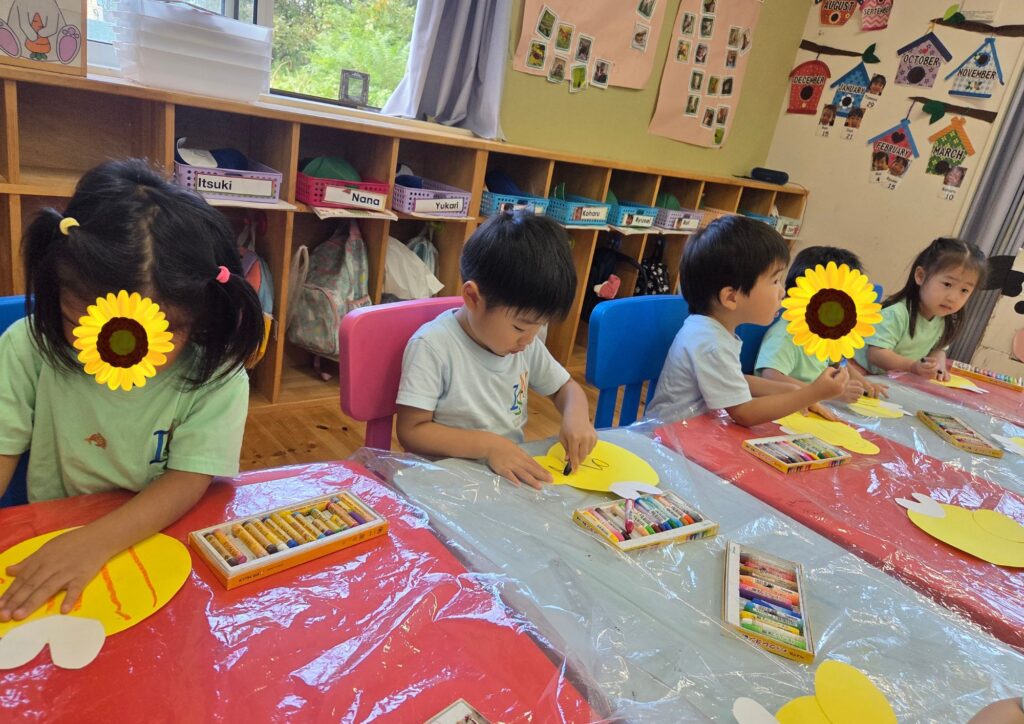
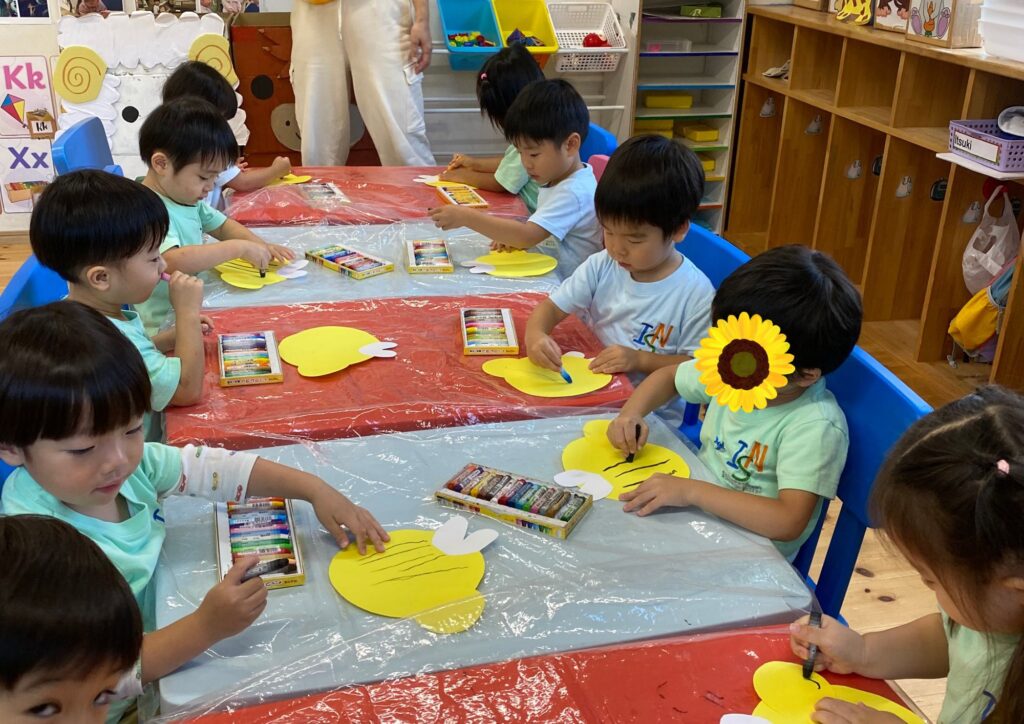
After inquiring and investing about large farm animals, we then started looking the humble honey bee. Last week we ate pancakes and drizzled sweet honey on top. This sparked the conversation “where does honey come from?” And “how do bees make honey?” We watched a video together about how bees collect nectar from flowers, and use that to create honey. Then, to reflect and digest what we had seen, we each made a craft piece of a big honey bee. While making it, students talked about bees buzzing from flower to flower, and how bees make honey for their babies. The results were fantastic, and each bee buzzed its way around the classroom looking for flowers!
今度は身近で小さなミツバチについて探究を始めました。
先週、私たちはパンケーキを食べ、上から甘いはちみつをかけました。そのことをきっかけに、「はちみつはどこから来るの?」「ミツバチはどうやってはちみつを作るの?」という疑問が生まれました。みんなで、ミツバチが花から蜜を集め、それを使ってはちみつを作る様子を動画で見ました。そして、見たことを振り返り、理解を深めるために、一人ひとり大きなミツバチの工作を作りました。工作をしながら、「ミツバチが花から花へ飛び回っていること」や、「ミツバチが赤ちゃんのためにはちみつを作っていること」について話していました。とてもかわいらしいオリジナルのミツバチと、色を塗った花の塗り絵をかざり、クラスの中で養蜂所も出来上がりました。
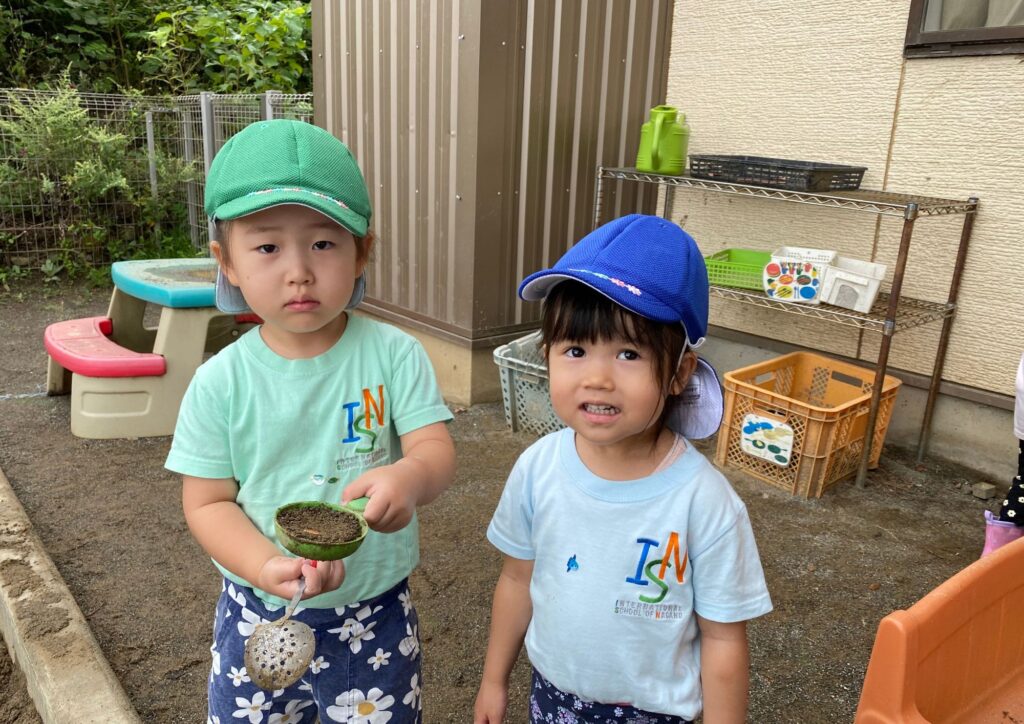
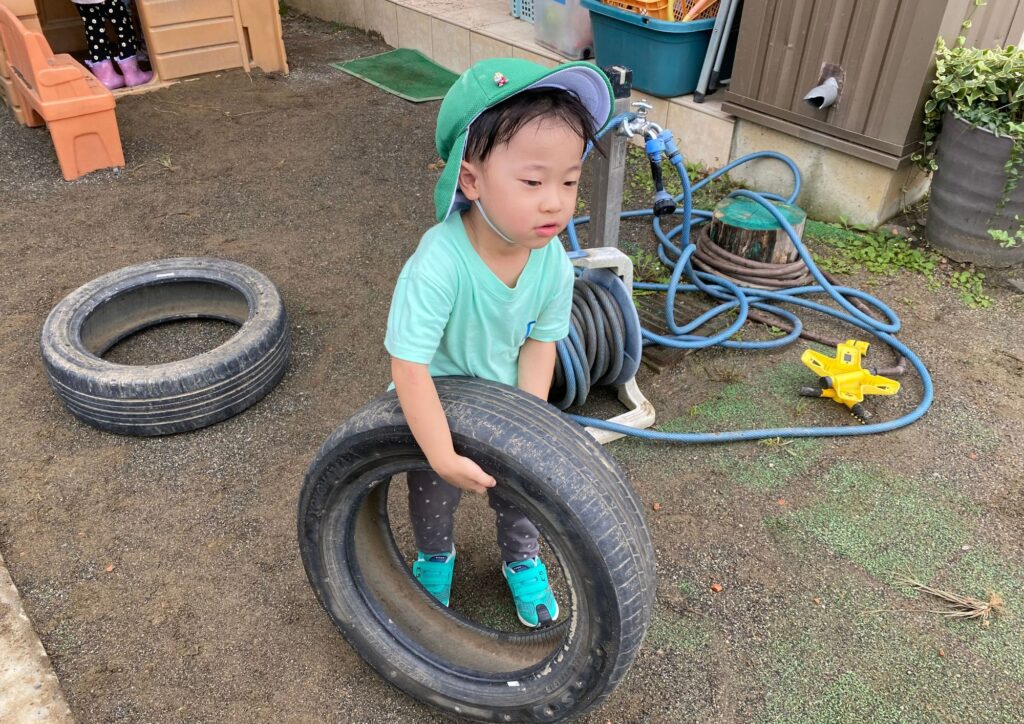
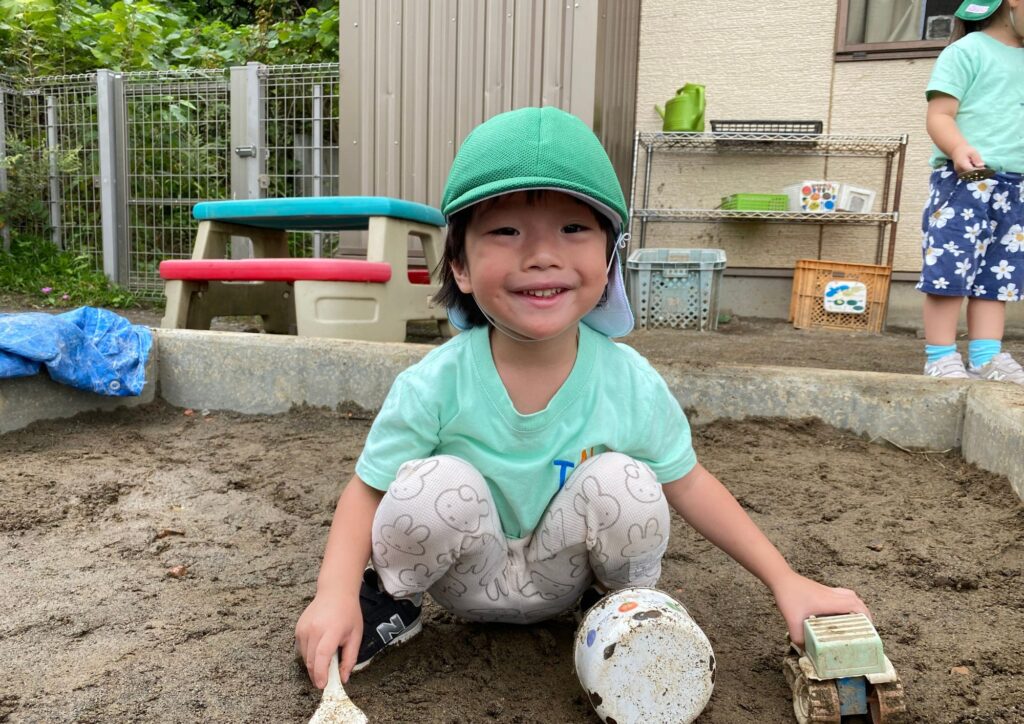
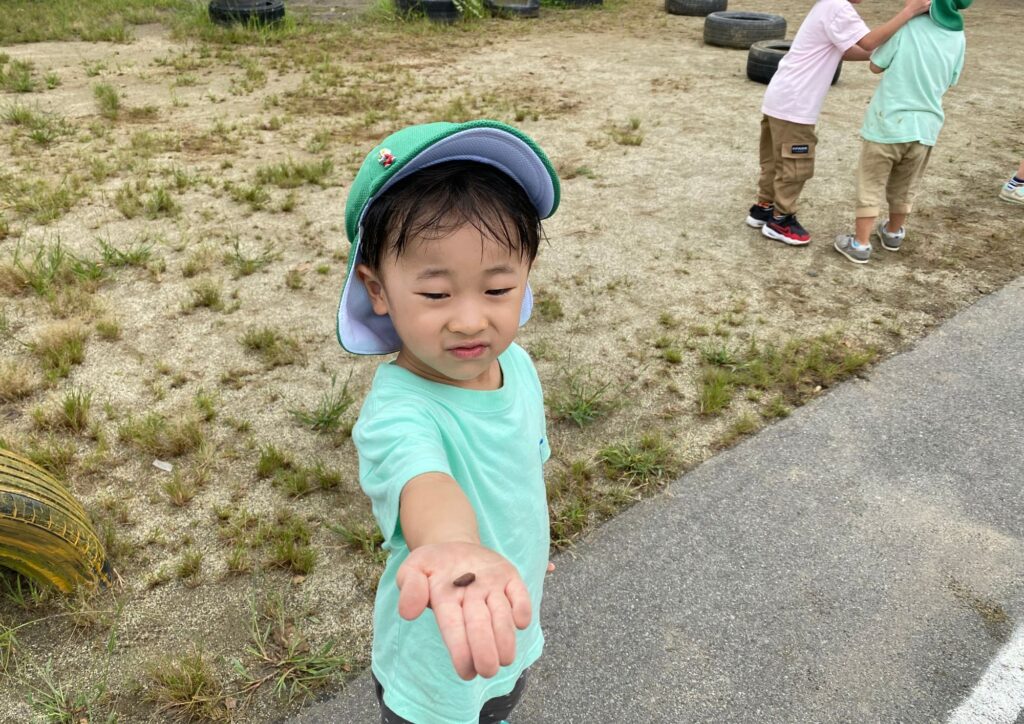
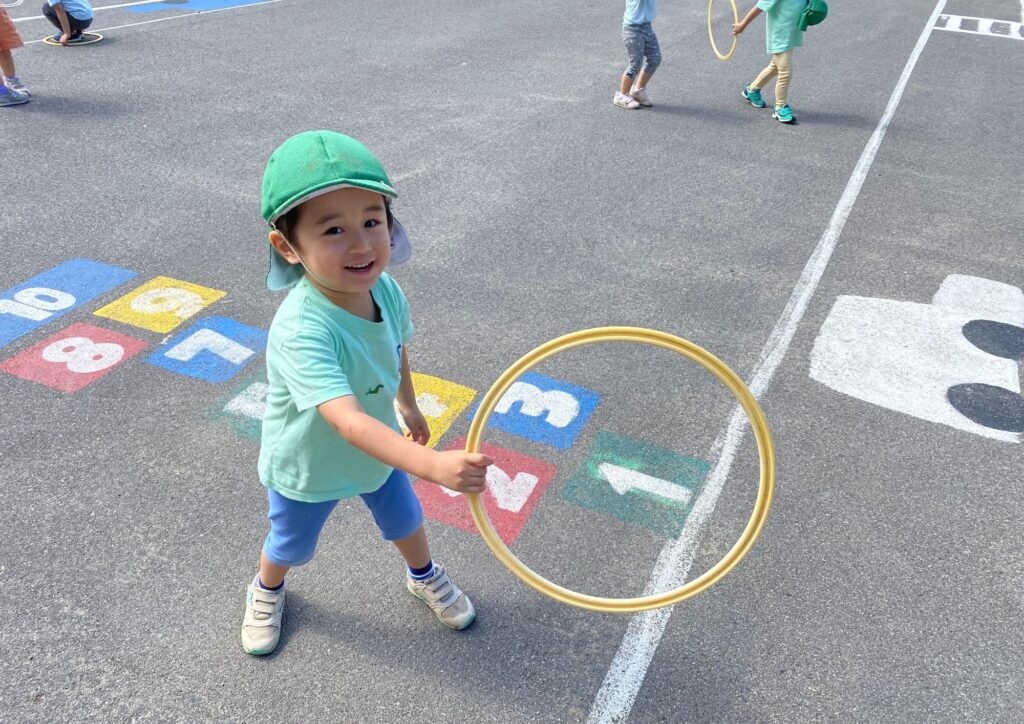
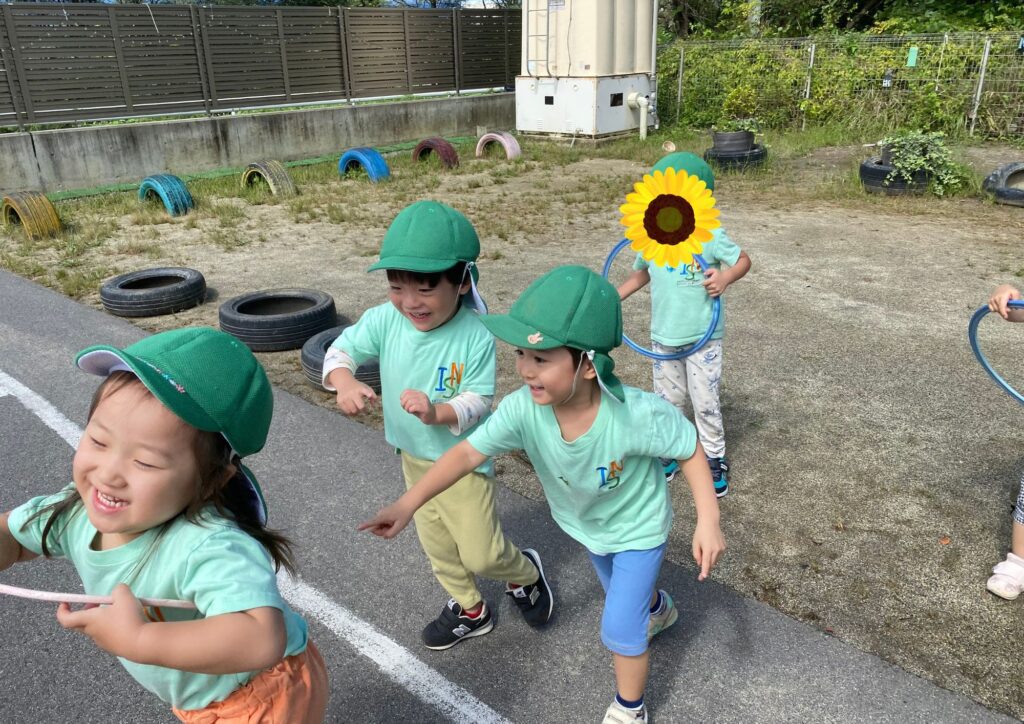
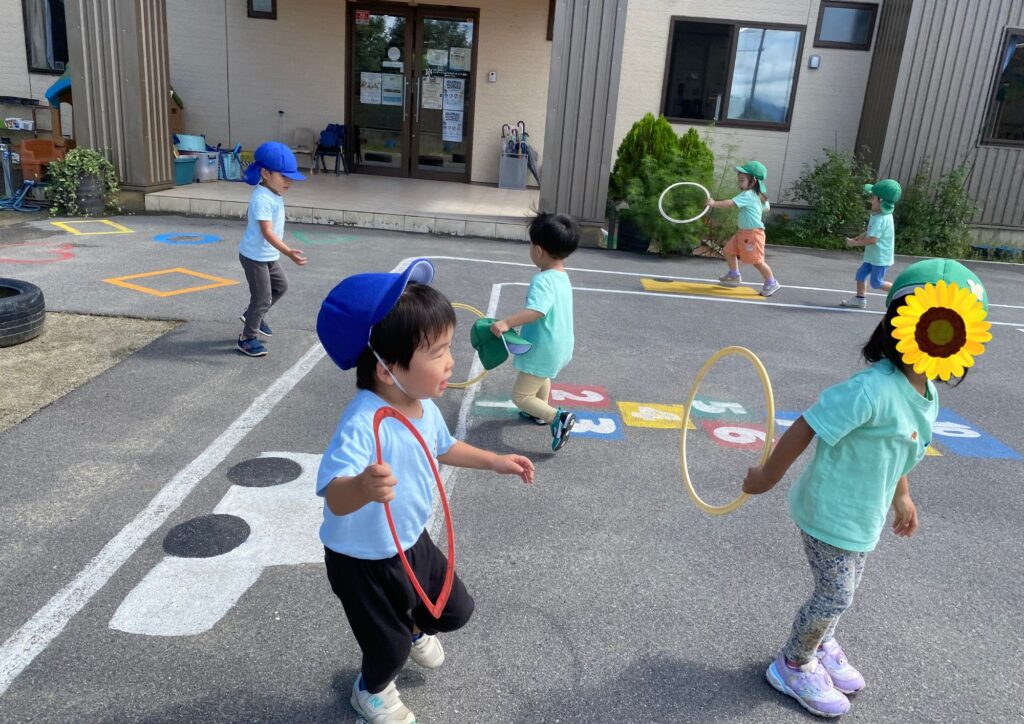
We had some clear days this week, so we took the opportunity to play outside as much as we could. One of the really fun ways we got to move our bodies was buzzing around the playground as bees, and some of the bees stung Mr Jimmy! Ouch! Some bees even went searching for flowers!
今週は晴れた日が何日かあったので、できるだけ外に出て遊ぶ時間を楽しみました。ミツバチになりきって園庭を飛び回り、Mr.Jimmyをチクッと刺したり花を探しに出かけたりと、子どもたちは想像力を膨らませながら、元気いっぱい遊びました。
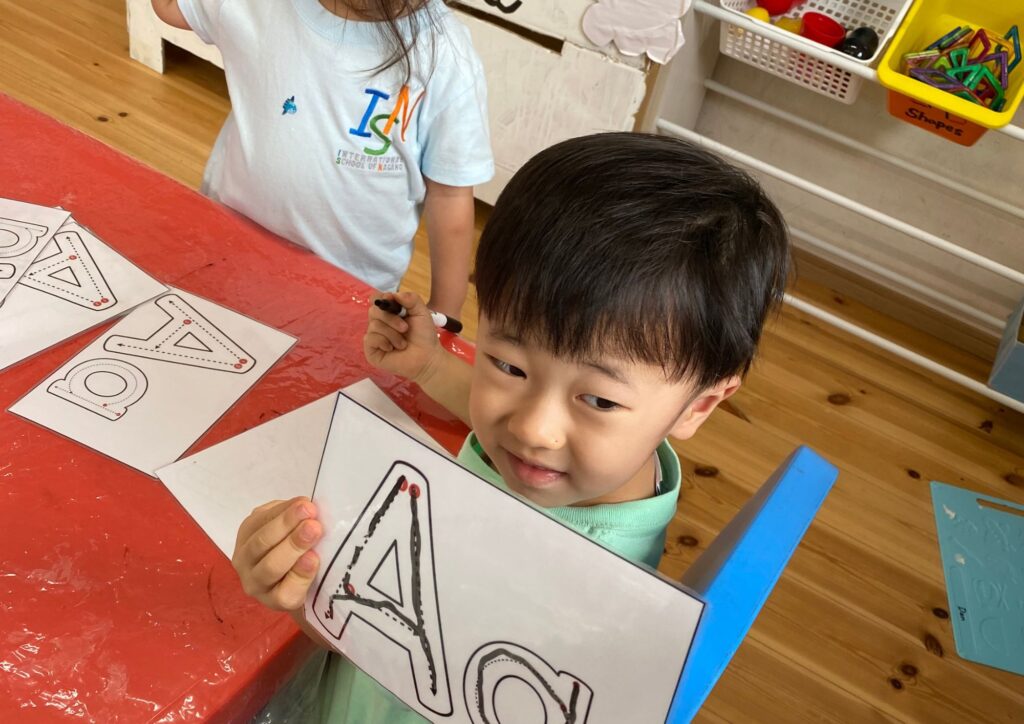
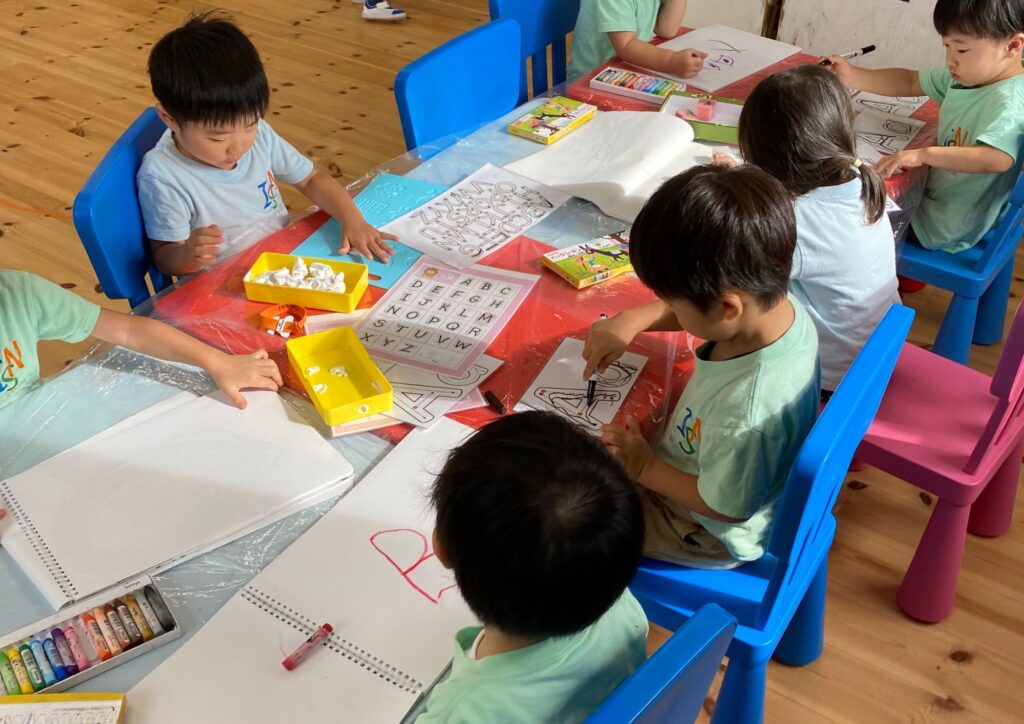
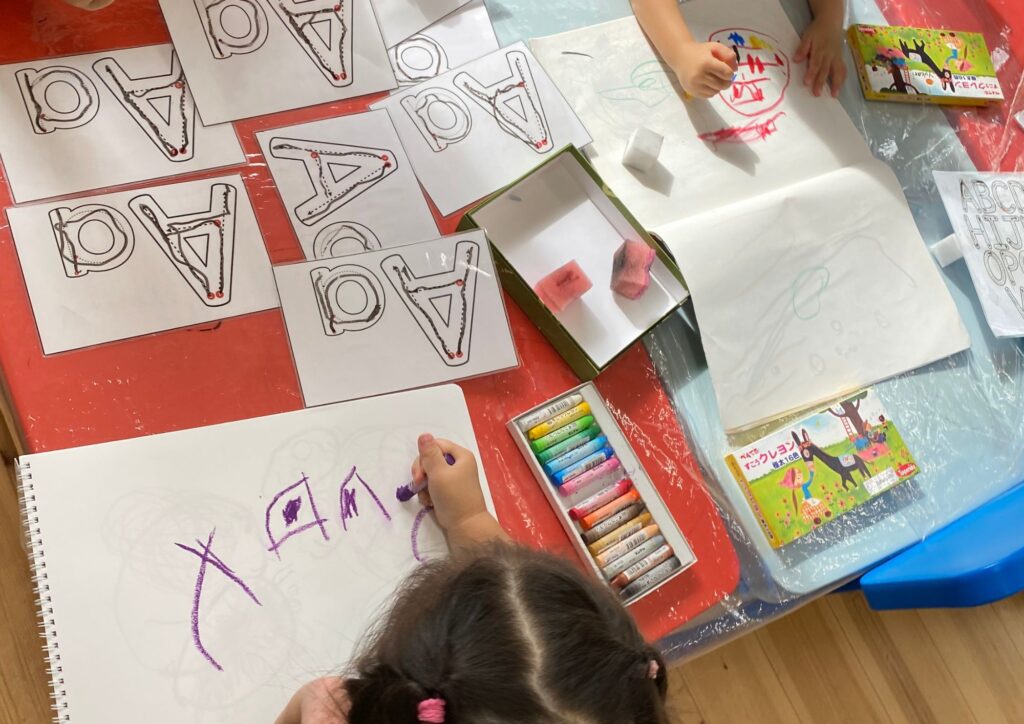
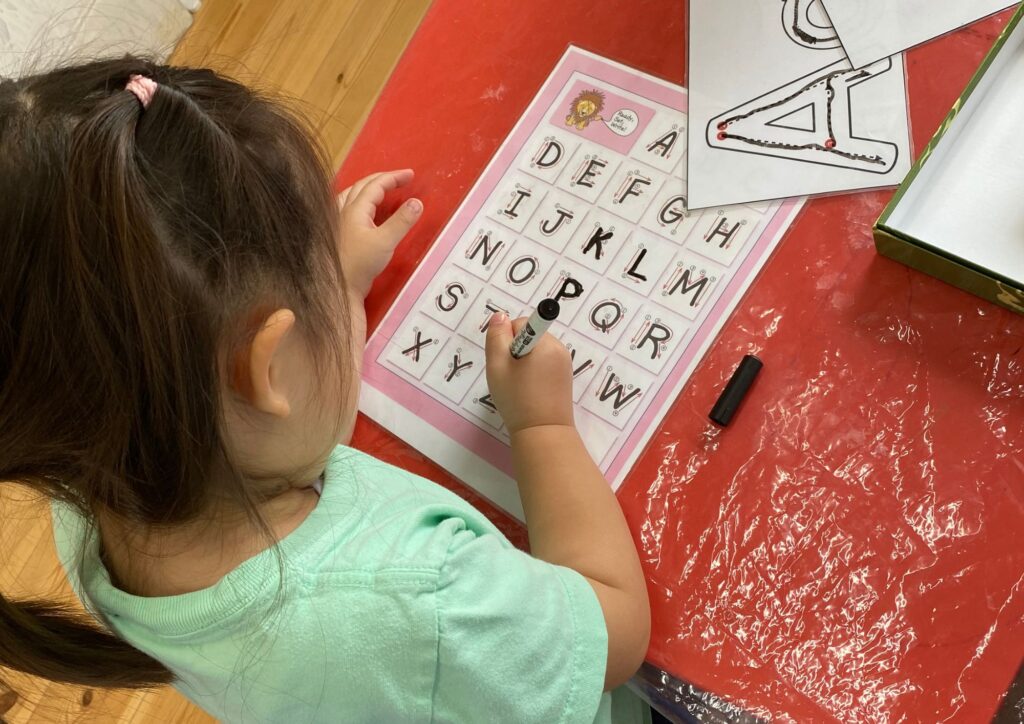
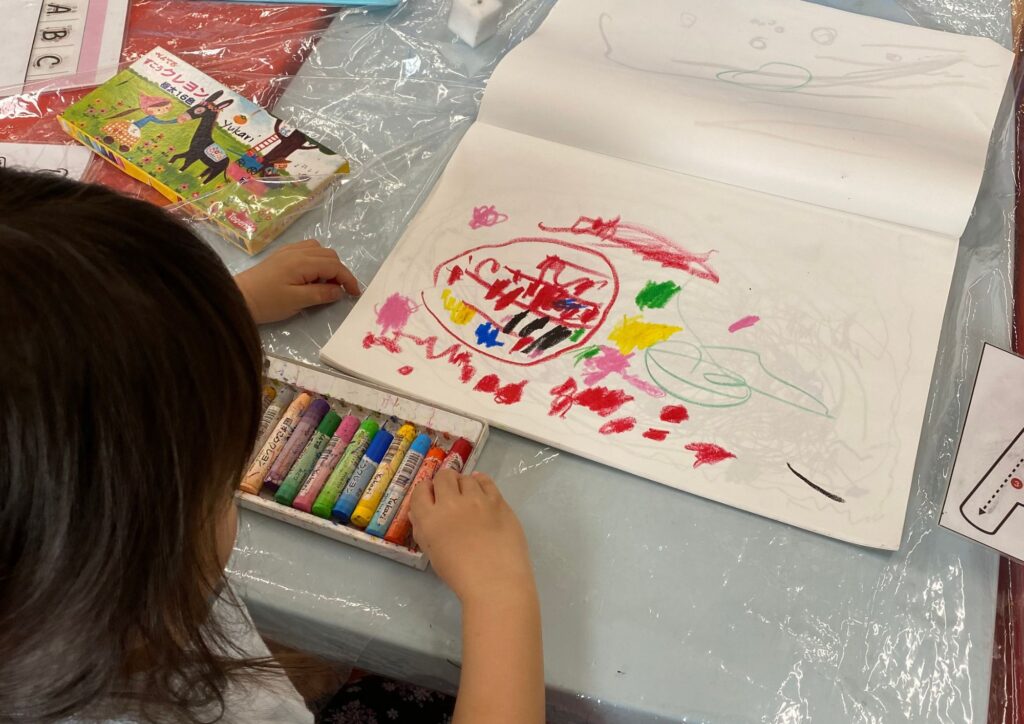
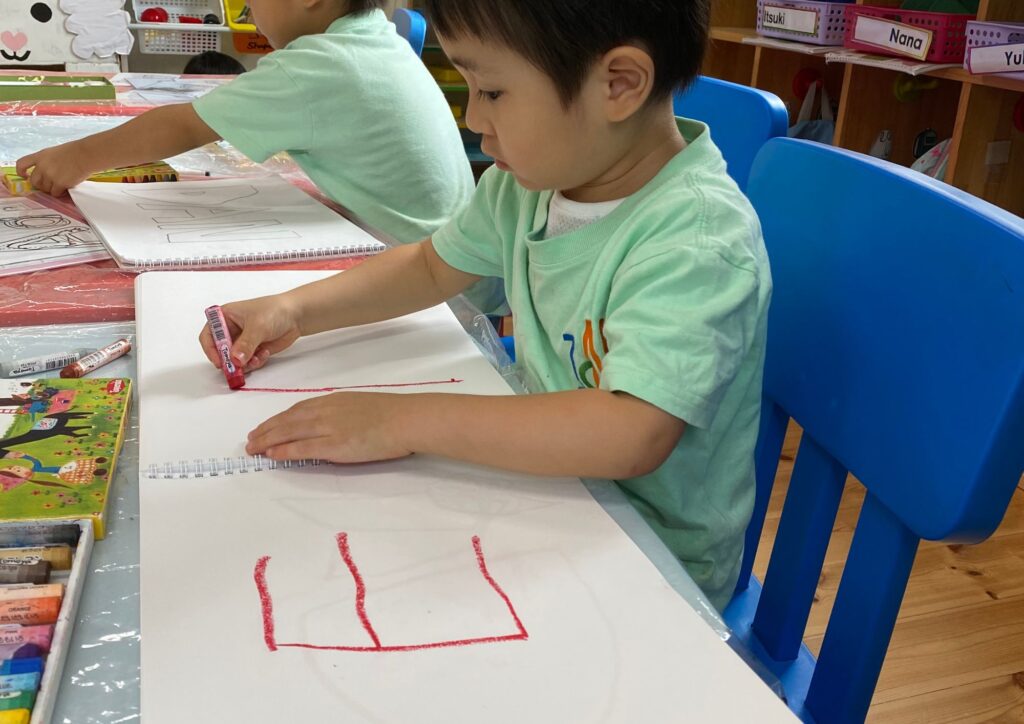
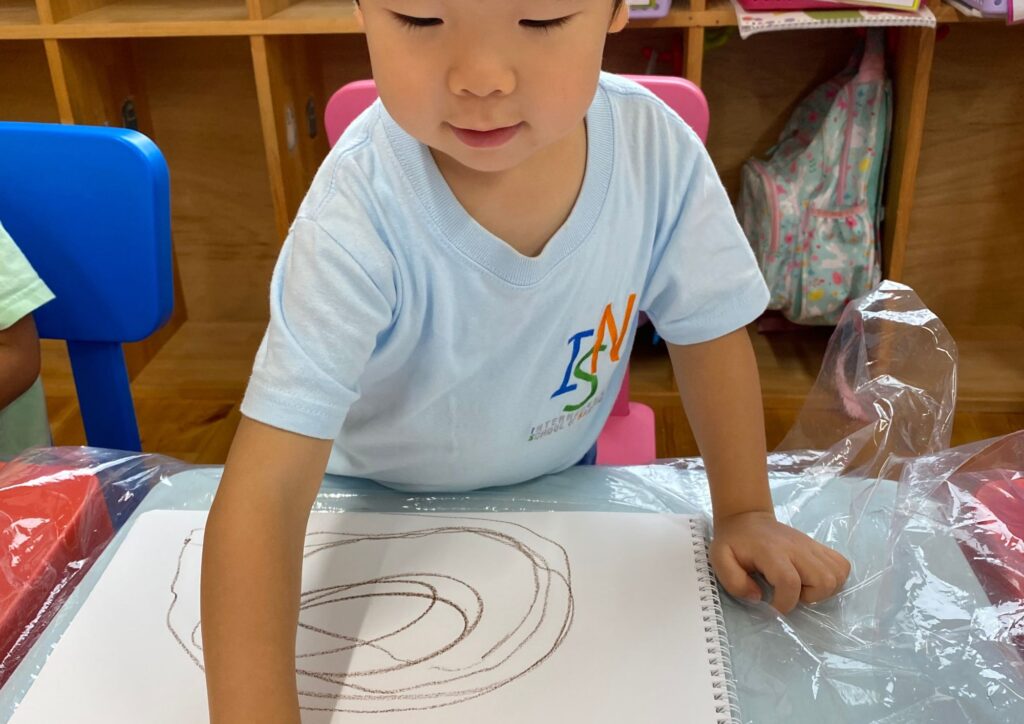
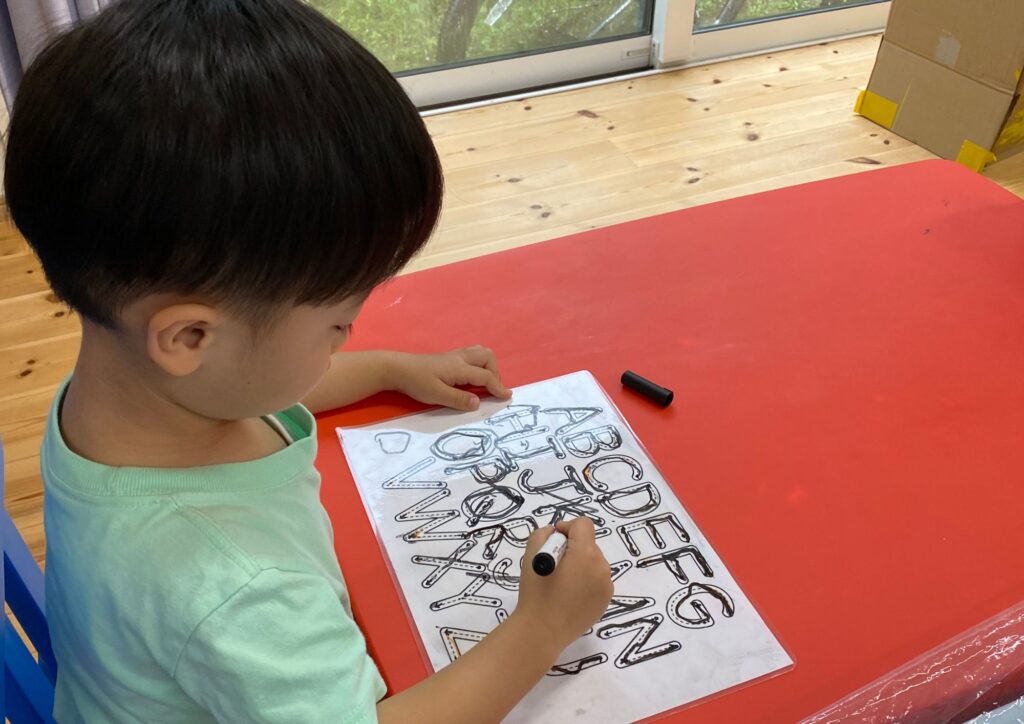
Finally, we have also been continuing our phonics studies by looking at the letters of the alphabet, exploring the shapes, and being creative with our crayons to see how it feels to write. Students were also free to trace the shapes of the letters using whiteboard markers. Even at three years old, we try to give students as much choice, freedom and agency as possible in their learning. You’re never too young (or old!) to learn how to learn!
アルファベットの文字に目を向け、形を探ったり、クレヨンを使って書く感覚を楽しんだりしながら、フォニックスの学習をしました。3歳の子どもたちにとっても、学びの中でできる限り多くの選択肢や自由、そして主体性を持てるようにすることを大切にしています。「学び方を学ぶ」のに、年齢は関係ありません!