🍂 Grade 4 Weekly News: Moon Models, Autumn Detectives & Fiery Festival Questions! 🌙🔥
What a busy week we’ve had in Grade 4! From investigating the signs of autumn to asking some wonderfully thoughtful questions about Nagano’s traditions, the children have been busy thinking, creating and learning.
🌙 Science: Moon Models and Autumn Detectives!
In Science, we finished our work on how the Moon moves. The children created moving models to show how the Moon orbits Earth and how Earth orbits the Sun. We then used our models to help us answer questions and explain what we had learned. It was a great way to turn some rather big ideas about space into something we could actually see and move!
We also put on our scientific detective hats to investigate a very important question: How do we know it is autumn? 🍁
Rather than simply saying, “Because it’s October!”, we went outside to look for evidence. What clues can we find in nature? Are the leaves changing colour? Are there fewer insects? Have the temperatures changed? What is happening to the plants and trees around us?
We discussed the difference between making a guess and using evidence to support an idea. Scientists need to observe carefully, collect evidence and explain how it supports their thinking. We’ll keep our eyes open as autumn continues to unfold around us!
✏️ English: Making Our Sentences Come Alive!
In English, we started with a busy Halloween picture packed with things to notice, describe and imagine. The children wrote sentences about what they could see, then learned three tools to help them upgrade their writing:
- Powerful verbs – instead of saying someone is running, perhaps they sprinted, dashed or stumbled!
- Precise adjectives – instead of describing snow as simply white, we might describe it as sparkling, powdery or untouched.
- Adding a detail – telling the reader where, how or why something is happening.
The aim is to help readers picture what is happening in their minds. A carefully chosen word or an extra detail can make a big difference! We’ll continue practising these tools as we develop our descriptive writing and historical fiction.
🔥 Inquiry: What Makes a Community Unique?
Our new unit is underway!
Our central idea is:
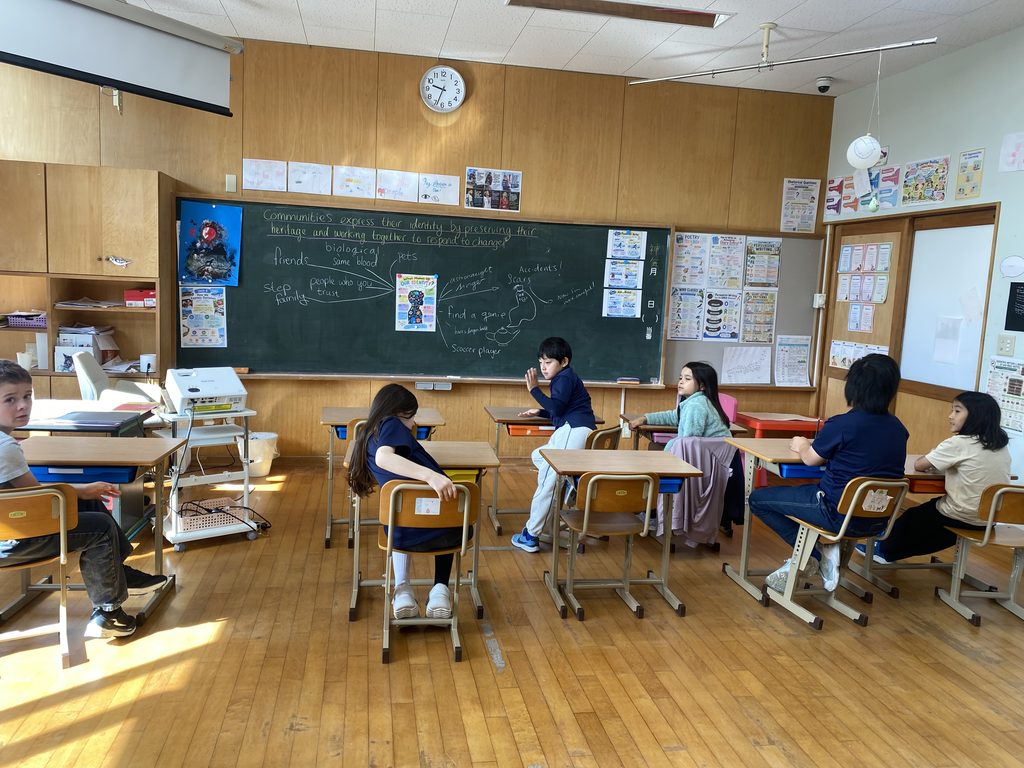
Communities express their identity by preserving their heritage and working together to respond to change.
But before we could explore how communities express their identity, we had to ask a more fundamental question: What is identity?
What makes a person who they are? What makes a community recognisable and special? How do our experiences, traditions, places, languages and shared memories shape our sense of belonging?
The children have started exploring their own identities as we begin to connect these ideas to the identity and heritage of our local community.
🌏 A Special Visit from Parents
On Wednesday, we welcomed parents into our classroom to help us explore festivals and cultural practices. We looked at photographs of festivals, mainly from Nagano, alongside a few from other parts of the world.
The children became curious investigators, asking questions such as:
- What do you think the people are doing?
- Why might they be doing this?
- What might this festival mean to the community?
- How might this tradition have started?
It was wonderful to have parents helping us explore these questions and share their perspectives. Thank you to everyone who joined us!
🔥 The Dosojin Festival: Questions, Questions, Questions!
We have also begun learning about the Dosojin Fire Festival in Nozawa Onsen, and the children have been preparing questions to ask people who participate in the festival.
Some of their questions are particularly thoughtful — and some are wonderfully direct!
For example:
- Why do you continue the festival even though it is dangerous?
- What does it feel like to swing the burning sticks?
- What does it feel like to be up there on top? Are you scared?
- Why fire?
- And one of my personal favourites: if you are protecting the shaden (the shrine-like wooden structure), why do you throw fire and stones down from the top?!
These questions show the children moving beyond simply describing what they see to thinking about the reasons, experiences and meanings behind a tradition.
I’m also curious about some of the details we have noticed. What is written on the matching dōkyūsei boiler suits worn by participants? What do the inscriptions on the tōrō lanterns mean? There is so much to discover when we look closely!
In the coming lessons, we’ll investigate questions such as:
- What roles do children play in the festival?
- What roles do women take?
- How has tourism affected the festival?
- How do people balance preserving a tradition with keeping participants and spectators safe?
We may not find answers to every question straight away, but that is part of the fun of inquiry. Good questions often lead us somewhere unexpected!
🏊 Friday Swimming: Nearly at the Finish Line!
Friday brought another swimming lesson, and we are getting close to the end of our Friday swimming sessions!
The children have been working hard, building their confidence and developing their swimming skills. It’s amazing how quickly the weeks have gone by. Our Friday trips to the pool will certainly be missed when the sessions finish!
📸 Help Us Explore Our Heritage!
As we continue this unit, we would love families to help us connect our classroom learning with real experiences and local knowledge.
If you have any photographs, personal stories or artefacts connected to festivals, traditions or cultural practices, please consider sharing them with us. These might be from a festival you have attended, a tradition celebrated in your family, or a special event in your community.
Depending on how our inquiry develops, we also hope to explore other aspects of heritage, including everyday practices, historic towns and buildings, and the landscapes that help shape a community’s identity.
You don’t need to have something elaborate or unusual to share. Sometimes the everyday things we take for granted are the most interesting when we stop to ask why we do them and what they mean.
We would love to hear about your experiences, knowledge and connections to Nagano and beyond. Your contributions can help the children see that heritage is not just something in a textbook — it is something people live, share and pass on.
Thank you for being part of our learning community. We look forward to discovering more about the traditions and stories that make our communities unique! 🍁
🍂 グレード4 週間ニュース:月のモデル、秋の探偵、そして火祭りへのたくさんの質問!🌙🔥
今週もグレード4では、盛りだくさんの一週間を過ごしました! 秋の訪れを示す証拠を探したり、長野の伝統について興味深い質問を考えたりと、子どもたちはさまざまなことに気づき、考え、学びました。
🌙 理科:月の動きをモデルで表そう!そして秋の探偵に!
理科では、月の動きについての学習を仕上げました。子どもたちは、月が地球の周りを公転する様子と、地球が太陽の周りを公転する様子を表す、動かせるモデルを作りました。そのモデルを使って、学んだことを説明したり、質問に答えたりしました。宇宙の大きな仕組みを、実際に動かしながら考えることができました!
また、科学者のように観察する力を使って、こんな大切な疑問についても調べました。
「秋になったことは、どうすれば分かるのだろう?」 🍁
ただ「10月だから!」と答えるのではなく、実際に外へ出て、証拠を探しました。自然の中には、どんな手がかりがあるでしょうか? 葉の色は変わっているかな? 虫の姿は少なくなったかな? 気温は変化しているかな? 周りの植物や木々には、どんな変化が見られるでしょうか?
子どもたちは、単なる予想と、考えを裏付ける証拠を使うことの違いについても話し合いました。科学者は注意深く観察し、証拠を集め、それが自分の考えをどのように裏付けるのかを説明します。これからも、秋が深まるにつれて自然がどのように変化していくのか、目を向けていきたいと思います!
✏️ 英語:もっと生き生きとした文章を書こう!
英語の授業では、たくさんのものが描かれたハロウィンのイラストを使って、見つけたことや想像したことを文章にしました。
その後、自分の文章をより豊かにするための 3つのツール を学びました。
- Powerful verbs(力強い動詞) — ただ「走る」と書く代わりに、「全速力で駆け抜ける」「急いで走る」「つまずきながら走る」など、動きをより具体的に表す動詞を選びます。
- Precise adjectives(的確な形容詞) — 雪をただ「白い」と表現するのではなく、「きらきら輝く」「ふわふわの」「誰も踏んでいない」など、読者がより鮮明に想像できる言葉を選びます。
- Add a detail(詳しい情報を加える) — どこで、どのように、なぜその出来事が起きているのかなど、詳しい情報を加えます。
目標は、読んだ人の頭の中に情景が浮かぶような文章を書くことです。言葉をひとつ工夫したり、詳しい情報を少し加えたりするだけで、文章は大きく変わります!
これからも、説明する力や歴史小説を書く力を伸ばしながら、3つのツールを使う練習を続けていきます。
🔥 探究:地域の個性とは何だろう?
新しいユニットが始まりました!
今回の中心的な考えは、次のとおりです。
地域社会は、文化遺産を大切に守り、協力して変化に対応することで、その地域ならではのアイデンティティを表現する。
地域がどのようにアイデンティティを表現しているのかを探究する前に、まず、もっと基本的な疑問について考える必要があります。
「アイデンティティとは何だろう?」
私たち一人ひとりを、その人らしくしているものは何でしょうか? 地域を、その地域ならではの特別な場所にしているものは何でしょうか? 私たちの経験、伝統、場所、言語、そして共有してきた思い出は、自分らしさや、どこかに属しているという感覚に、どのような影響を与えるのでしょうか?
子どもたちは、自分自身のアイデンティティについて考える活動を始めました。これから、その考えを地域社会のアイデンティティや文化遺産についての学びにつなげていきます。
🌏 保護者の皆さまを迎えて
水曜日には、保護者の皆さまに教室へお越しいただき、祭りや文化的な慣習について一緒に考える時間を持ちました。
長野県を中心に、世界各地の祭りの写真もいくつか見ながら、子どもたちは興味深い探究者となって、さまざまな質問を考えました。
- 人々は何をしているのでしょう?
- なぜ、このようなことをしているのでしょう?
- この祭りは、地域の人々にとってどのような意味があるのでしょう?
- この伝統は、どのように始まったのでしょう?
保護者の皆さまにも、それぞれの視点から一緒に考えていただくことができ、とてもうれしく思いました。ご参加くださった皆さま、ありがとうございました!
🔥 道祖神祭り:知りたいことがいっぱい!
野沢温泉の道祖神祭りについても学び始めました。子どもたちは、実際に祭りに参加する方々に尋ねてみたい質問を考えています。
とてもよく考えられた質問もあれば、子どもらしい率直な質問もあります!
例えば……
- 危険があるのに、なぜこの祭りを続けているのですか?
- 火のついたたいまつを振り回すと、どんな気持ちになりますか?
- あの高い場所の上にいると、どんな気持ちになりますか? 怖くないのですか?
- なぜ火を使うのですか?
- そして、私のお気に入りの質問のひとつがこちらです。「社殿を守っているのに、なぜ上から火や石を投げるのですか?」
子どもたちの疑問は、見た目の特徴を説明するだけでなく、伝統の背景にある理由や、参加する人々の気持ち、そして祭りが持つ意味を考えるものへと広がっています。
私自身も、気になっていることがあります。参加者が着ているおそろいの「同級生」のつなぎには、何と書かれているのでしょう? 灯籠に書かれた文字には、どんな意味があるのでしょうか? よく観察すると、知りたいことが次々に出てきますね!
これからの授業では、次のような疑問についても調べていく予定です。
- 子どもたちは祭りでどのような役割を担っているのでしょう?
- 女性たちはどのような役割を担っているのでしょう?
- 観光は祭りにどのような影響を与えてきたのでしょう?
- 伝統を守ることと、参加者や見物客の安全を確保することを、どのように両立させているのでしょう?
すべての質問にすぐ答えが見つかるとは限りません。でも、それも探究の面白さのひとつです。よい質問は、思いがけない発見につながることがあります!
🏊 金曜日の水泳:いよいよ終盤です!
金曜日には、また水泳の授業がありました。そして、毎週金曜日の水泳レッスンも、いよいよ終わりに近づいています!
子どもたちは一生懸命に取り組みながら、自信をつけ、泳ぐ力を少しずつ伸ばしてきました。振り返ると、あっという間に時間が過ぎたように感じます。レッスンが終わったら、金曜日のプールでの時間が少し寂しくなりそうですね!
📸 地域の文化遺産について、ぜひ教えてください!
このユニットをさらに深めていくために、ご家庭の経験や地域についての知識をぜひお借りしたいと思っています。
祭り、伝統、文化的な慣習に関する写真や個人的なエピソード、実物の資料などがありましたら、ぜひ共有してください。実際に参加した祭りの写真、ご家庭で受け継がれている伝統、地域の特別な行事など、どのようなものでも大歓迎です。
探究の進み具合や時間に応じて、日々の暮らしの中にある慣習、歴史ある町並みや建物、地域のアイデンティティを形づくる風景などについても学んでいきたいと考えています。
特別なものや珍しいものでなくても大丈夫です。普段は当たり前だと思っていることも、立ち止まって「なぜ、私たちはこれをするのだろう?」「これは私たちにとって、どんな意味があるのだろう?」と考えてみると、実はとても興味深い発見につながることがあります。
長野や世界のさまざまな地域について、皆さまの経験、知識、思い出などをぜひお聞かせください。ご家庭からの共有は、文化遺産が教科書の中だけにあるものではなく、人々が日々の暮らしの中で実践し、分かち合い、次の世代へと受け継いでいくものであることを、子どもたちが理解する助けになります。
いつも子どもたちの学びを支えてくださり、ありがとうございます。これからも、私たちの地域を特別な場所にしている伝統や物語を、一緒に発見していくのが楽しみです! 🍁
短くして読みやすくまとめる保護者向けに自然な日本語へ整える